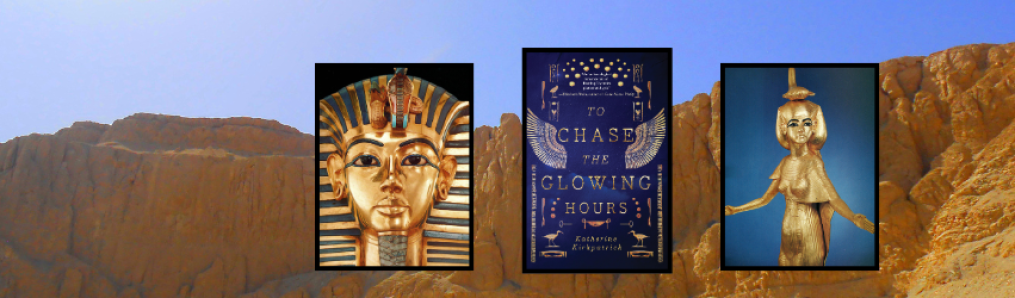

The most fantastic thing I did to research my novel To Chase the Glowing Hours was to fly near the Valley of the Kings in a hot air balloon. My sister, Jen, brother-in-law, Eric, and niece, Alice, toured Egypt together. The balloon ride was my twenty-two-year-old niece’s idea. I have a great fear of heights, but I didn’t want to miss out on a once-in-a-lifetime opportunity.
Our group left the Luxor Palace Hotel in the early hours of the morning. While it was still dark, we rode a small ferry across the Nile and then took a van to the launch site. The balloons go up at sunrise because the winds are calmest, and the visibility is best. That morning, the tour company would send up about twenty balloons. The staff, young Egyptian men, lay the balloons flat on the ground. Then came the roaring of motors as the balloons inflated, followed by dramatic bursts of orange flames as each burner ignited. One by one, the balloons popped up and took shape.
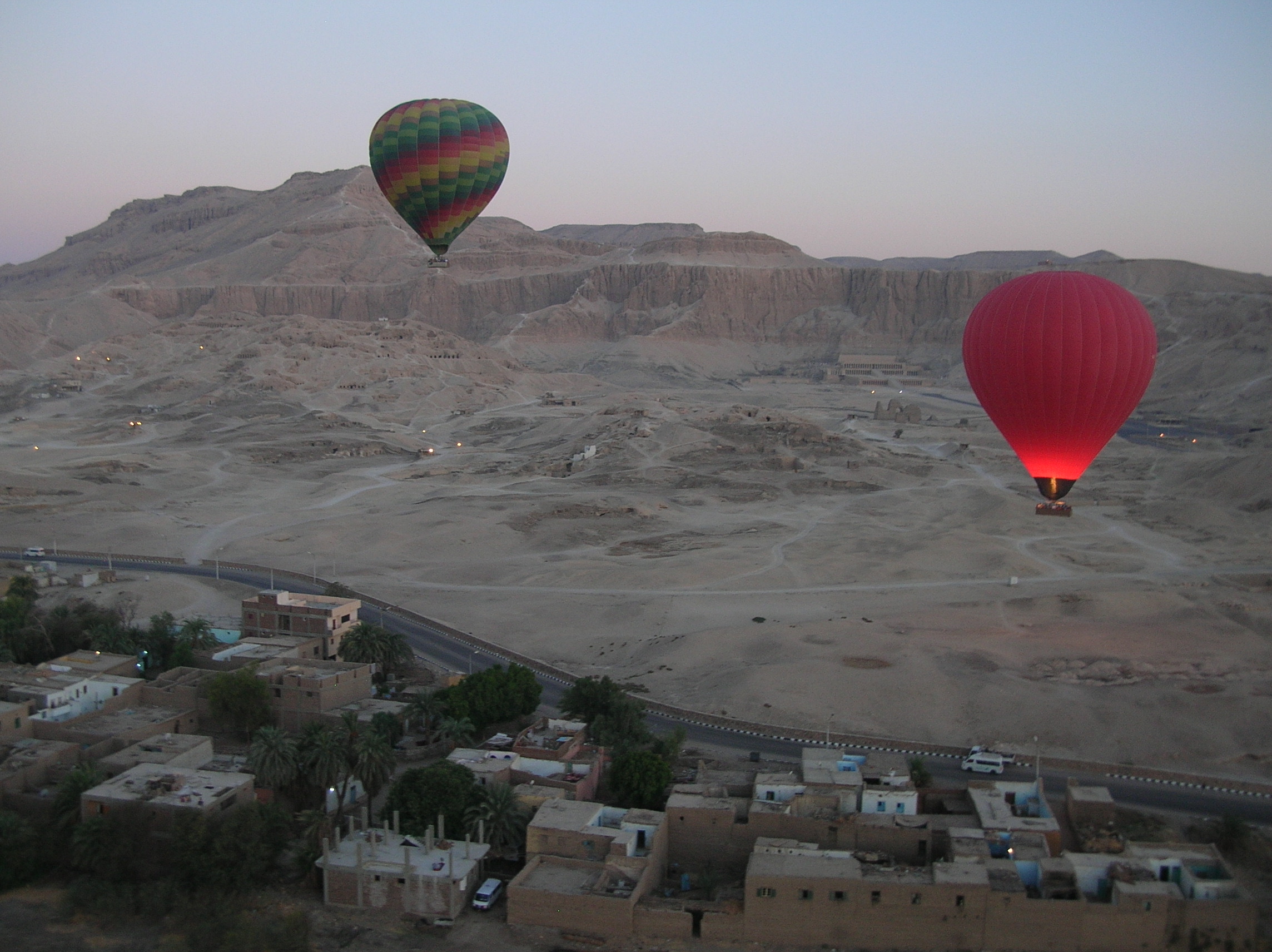
As the first glow of pink appeared on the eastern horizon, I climbed into the balloon basket with my family and about ten others. The basket was four feet deep and divided into quadrants. The pilot stood in the middle, holding a cord that controlled the two burners to raise or lower the balloon. Terrified, I crouched. I gripped the rope handles inside the basket. The burners roared. I felt their heat. I expected the balloon launch to be something like an airplane lift-off. Instead, the balloon rose slowly, almost imperceptibly. If I hadn’t plucked up the courage to sit up and look out over the basket, I would not have known we were airborne.
The striking view was that of the Nile and its banks, brilliant, green and winding, set against the stark brown desert. Rectangles of lush sugarcane fields, groups of houses, and thick brush ended in an abrupt demarcation. The desert, rugged and vast, appeared empty and utterly lifeless—just brown rocks and distant rocky hills.
The balloon rose higher and gently drifted west toward the desert. In the east, beyond the Nile, a rim of purple and soft pink stood out against an azure sky. All at once, the sun rose like a silent explosion, a dazzling orb of orange red. This was the sacred moment of a newly born day. Time seemed to stand still, like Ra emerging in his solar boat, poised before sweeping across the sky.
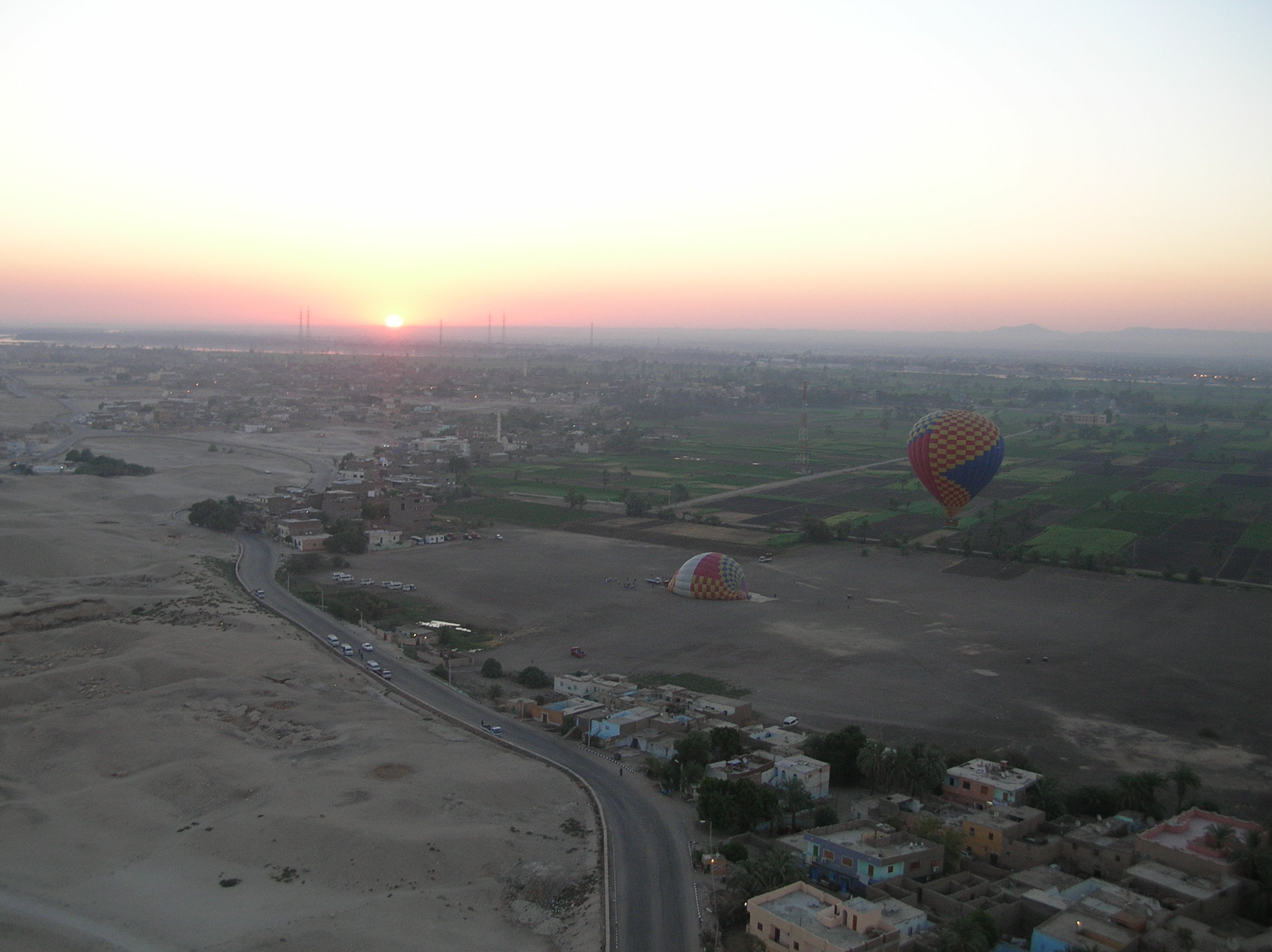
The sun illuminated the desert in a golden glow as the balloon drifted gently and peacefully. I still clenched a handle with one hand. I reminded myself to breathe. At the same time, the delight I felt at seeing the magnificent panorama of the golden desert surpassed my fear of heights. Aside from a few noisy, hot bursts of the burners, the ride felt tranquil. The other balloons in our cohort, drifting nearby, added to the colors and variety of the panorama. The air felt pleasantly cool.
The first ancient easily identifiable monument to come into view, and the most spectacular, was the Temple of Queen Hatshepsut. Built into the towering, fissured ridge behind it, the building unfolds into three massive terraces. I spotted the ramps of the terraces that I’d walked up a few days earlier.

As we neared the Valley of the Kings, I recognized the great peak of El Qurn among the sloping cliffs and a fleeting view of a road, zig-zagging upwards through them. I could see man-made alterations within the irregular shapes of the natural limestone rock formations. I’d experienced the enormous scale of the cliffs on foot that week. Seen from above, the sight of that mountainous cluster, wrinkled with canyons, came across as even more colossal and arresting.
I couldn’t distinguish the Valleys of the Kings and Queens. Both seemed to be one rocky mass. Nor did I see any “valleys”—only crags. What I did see, due to a gift of the wind sending us in that direction, was Deir el-Medina, the ancient workers’ village. Situated within a natural amphitheater in the curve of cliffs, a walled enclosure contains stone foundations of about seventy dwellings.

Soon, the views of the desert gave way to a patchwork of green fields, growing larger in our mostly sideways descent. It was time to land. The half hour in the air had passed quickly. I felt sorry the ride was ending. I heard a dog barking. To my delight, I saw a boy and a man with a dozen or so goats of varying colors, as well as a skinny brown dog. The curious boy looked upward, then ran toward a small house. Another man came out. The startled goats scattered.
A van from the balloon tour company approached on a small road between the fields. The van came to a stop near the field, and two staff members leapt out. The pilot threw ropes to them from our balloon. One of the goat herders shouted angrily at our pilot in Arabic. The pilot shouted back in Arabic. The pilot instructed us passengers to crouch for the landing. All I felt was a slight bump. Our group waited in the balloon basket while the burners cooled. The morning had turned very hot and sunny.
The dispute continued. It related to the goat herder demanding payment for the balloon landing on his property. We’d drifted off course by a half mile. To me, that detour only added to the excitement of the tour. Soon, we climbed out of the basket and were ushered into the van, while the tour staff swiftly deflated and packed up the balloon. The goat herder received his payment.
And so, my Egyptian hot air balloon adventure concluded, an hour of my life that I have relived with pleasure many times.
Check out the accompanying video to this blog post: https://youtube.com/shorts/G785MiTCVaw in the “To Chase the Glowing Hours: A Novel of Highclere and Egypt” playlist on the YouTube Channel Katherine Kirkpatrick @Sketches_and_Explorations.
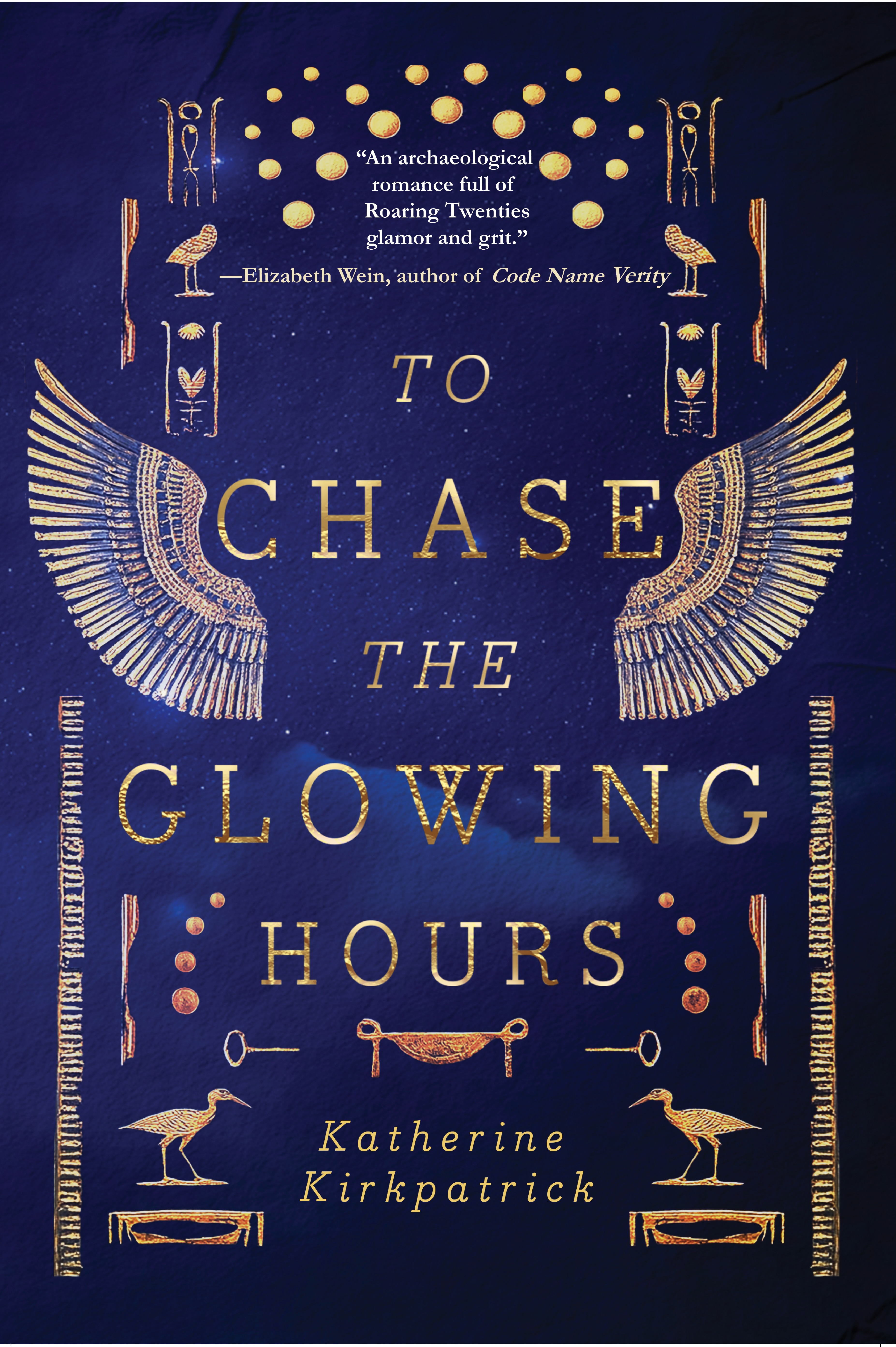
To Chase the Glowing Hours: A Novel of Highclere and Egypt by Katherine Kirkpatrick (Regal House Publishing, September 2025).


 Katherine Kirkpatrick