Katherine Kirkpatrick’s Historical Novel Society Interview

INTERVIEW BY KAREN DRURY for The Historical Novel Society

Katherine Kirkpatrick is the author of ten books, both fiction and nonfiction. When not flying over the Valley of the Kings in a hot air balloon or exploring the secret cabinets of Highclere Castle, she can be found at her computer in Seattle, Washington. Check out Katherine’s YouTube videos on the To Chase the Glowing Hours playlist.

How would you describe this book and its themes in a couple of sentences? 

To Chase the Glowing Hours features the real-life residents of Highclere Castle, the manor made famous in the Downton Abbey television series and films. Lady Eve, the 21-year-old daughter of the Earl of Carnarvon, travels from her opulent home in the English countryside to the Valley of the Kings in Egypt. There, she hopes to realize her father’s dream of finding an intact royal tomb, that of King Tutankhamun. Amidst the excitement of her adventure, Eve finds herself drawn to the brilliant yet temperamental archaeologist Howard Carter. Set against the alluring and glamorous backdrops of Egypt and England in the 1920s, the novel explores themes of love, grief, loss, privilege, and self-discovery.

What inspired you to write this novel?

My fascination with ancient Egypt began as a young child. In 1977, my parents took my family to see the Tutankhamun exhibition at the Metropolitan Museum of Art (MMA) in New York. I stood before Tut’s gold mask, mesmerized. Years later, as I wrote To Chase the Glowing Hours and envisioned Lady Eve entering the tomb, I tried to convey the same sense of wonder I’d felt at the Metropolitan Museum.

My beloved brother, the late author and filmmaker Sidney Kirkpatrick (see SidneyKirkpatrick.com), introduced me to the subject of Lady Eve and suggested I write her story. He learned of Eve when he was interviewing Thomas Hoving, a former director of the Metropolitan Museum of Art. Hoving’s book Tutankhamun: The Untold Story contains an intriguing footnote that became the basis for my novel. Hoving found Lady Eve’s letters to Howard Carter in the Metropolitan’s archives and remarked on their gushing tone.
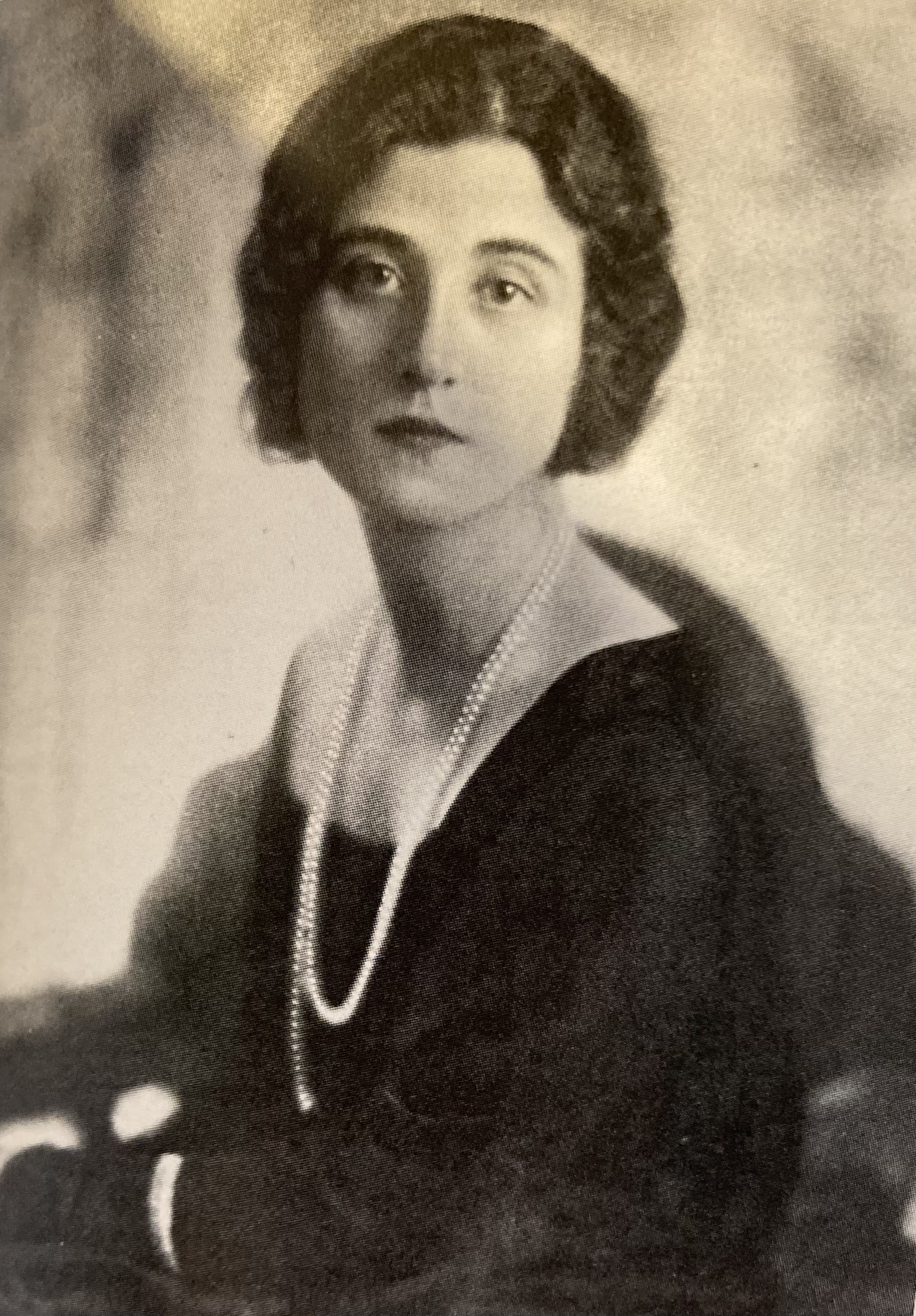
Lady Evelyn Herbert, daughter of the Earl of Carnarvon of Highclere Castle

Would you consider writing the Egyptian side of the story? 

Great idea! Someone Egyptian will have to do it. I hope archaeologist Dr. Zahi Hawass will write a novel about the excavation (he’s writing novels now, you know). Ahmed Gerigar, the chief foreman for the Tutankhamun excavation, would make a good protagonist. Gerigar was an archaeologist in his own right. He didn’t have a university degree or professional affiliation. But neither did Howard Carter (nor Lord Carnarvon, for that matter). But unlike the British men on the dig, Gerigar is never referred to as an archaeologist or Egyptologist or given much credit.

What is your research process? 

I do enough book and archival research to get myself started, then continue to research while drafting. Whenever possible, I visit my book’s settings. For Glowing Hours, I toured Eve’s home, Highclere Castle, twice. That was relatively easy; my late mother-in-law was British, and I was already in a pattern of visiting England every two or three years. Journeying to Egypt was a far bolder adventure to undertake. I left my husband and two young children at home in Seattle, and joined my sister, Jennifer Kirkpatrick, my brother-in-law, Eric Zicht, and my niece, Alice, for an expedition. We stayed in the Luxor Winter Palace Hotel, Lady Eve’s hotel. We visited Howard Carter’s house. We explored Tutankhamun’s tomb, of course. We ferried down the Nile and flew over the Valley of the Kings in a hot air balloon.
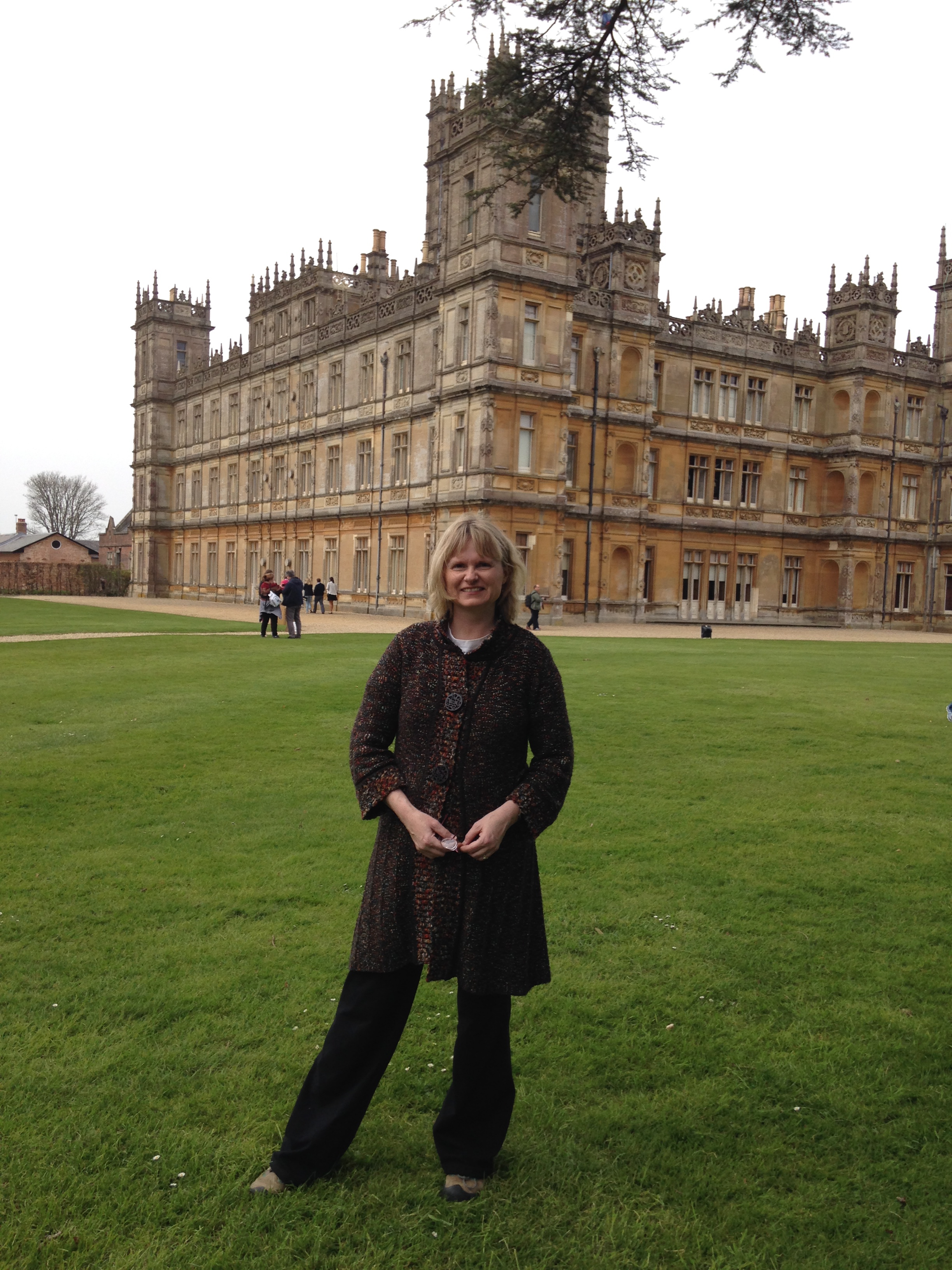
The author at Highclere Castle.

What research did you leave out for this book? 

Eve’s lady’s maid, Marcelle, accompanied her to Egypt on some of her trips. The Egypt scenes were better without her.

What’s hardest for you to write in fiction – real people in history, or fictional characters living in the period? 

Real people.  If you make up too many details, you open yourself up to criticism by readers. At the same time, if you don’t make up details, characterization falls flat. History comes to life through a character’s feelings, thoughts, and opinions.

The colonial aspects of the period might jar some readers. How do you balance the authenticity of the book and its era with modern sensibilities?

The allotment of the treasures is a crucial element of the plot. The discovery of the tomb coincided with the Egyptian nationalist movement toward total independence from Britain. Before the 1920s, foreign excavators claimed a considerable share of the findings. The Egyptian government’s insistence that the Tutankhamun artifacts remain in Egypt became the basis for a new, essential, equitable policy.

Early in the book, Eve, like her father, imagines how nice it would be to see statues from the tomb framing a great fireplace at Highclere Castle. Later in the book, she adopts a more modern point of view that the treasures ought to remain in Egypt. That change of consciousness occurs gradually over many chapters. If the character of Lady Eve had not evolved in that way, she’d come across as highly unsympathetic.

What is your occupational background, and how does that shape your writing?

For a decade after college, I worked in New York City in editorial and rights jobs at E. P. Dutton, Henry Holt, and Macmillan, and as a freelance writer and editor for educational publishers. Though I never rose high in the ranks, I learned a lot about the book business and gained contacts. I sent my first young adult novel to the Delacorte Press, to a former boss of mine; she published it, and numerous other books.

After 2000, on the West Coast, I stayed at home to care for younger and older family members. Frequent trips to libraries gave me a good excuse to see what new titles were being published. Reading lots of books aloud came with many benefits, both for my children and for me. While caretaking, I also learned to manage my time efficiently.
What’s your next project?

I’m returning to some children’s book projects for the first time in a decade.

What’s your best writing advice?                                            

Learn about story structure before you get too deeply into a draft. Scott Driscoll, professor of fiction writing at the University of Washington’s Professional and Continuing Education department, taught me about structure. He uses Story by Robert McKee in his classes. My other advice is to make book trailers to generate excitement for your title. To see photos of the real Lady Eve, visit the “To Chase the Glowing Hours” playlist on my YouTube channel, Katherine Kirkpatrick Sketches_and_Explorations.

What is the last great historical fiction novel you read?

Horse by Geraldine Brooks. May we all aspire to writing such beautiful prose.

Thanks for the interview!
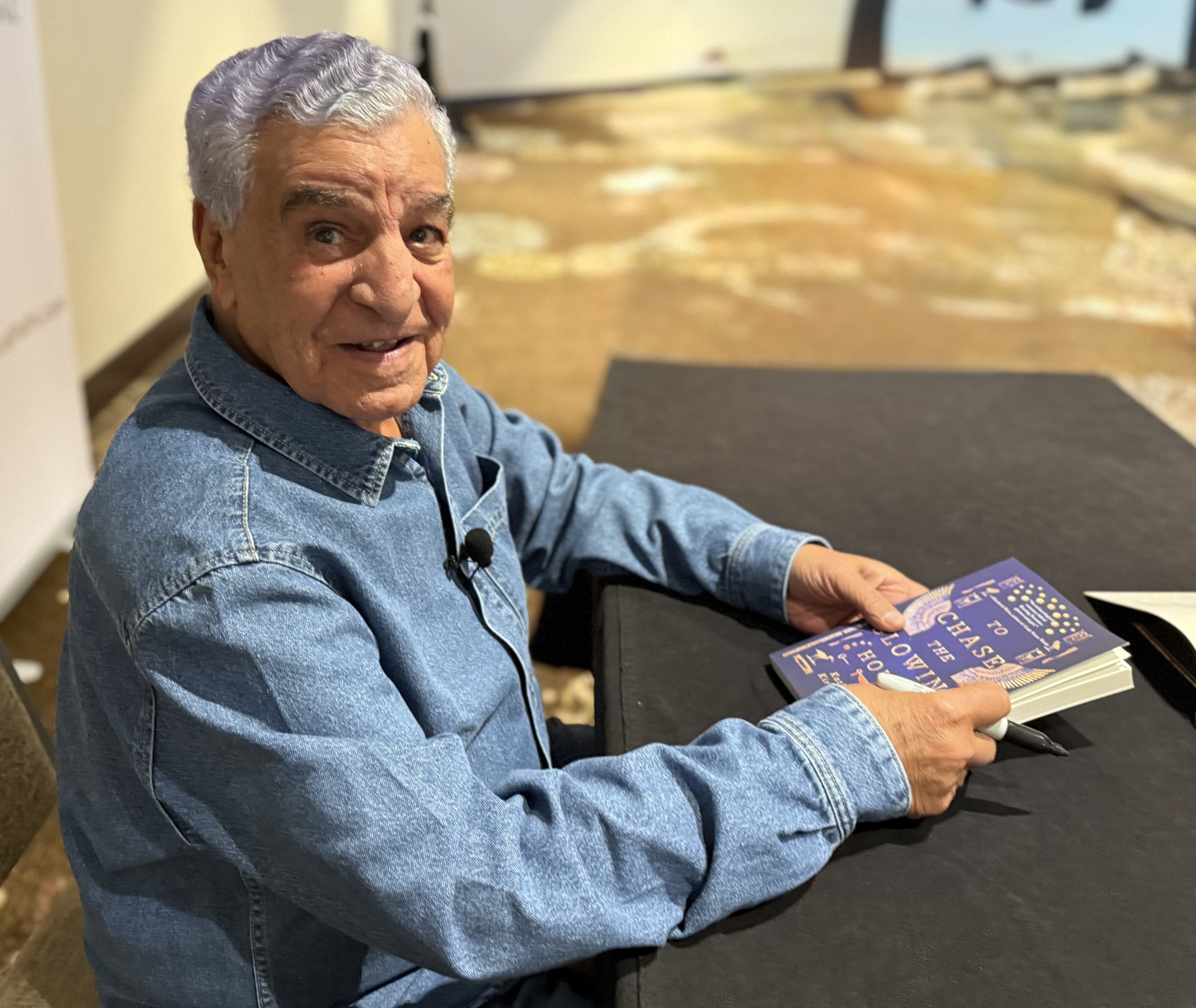
Dr. Zahi Hawass, Egyptian archaeologist.

Katherine Kirkpatrick and Dr. Zahi Hawass


Journey to the Valley of the Kings by Hot Air Balloon

The most fantastic thing I did to research my novel To Chase the Glowing Hours was to fly near the Valley of the Kings in a hot air balloon. My sister, Jen, brother-in-law, Eric, and niece, Alice, toured Egypt together. The balloon ride was my twenty-two-year-old niece’s idea. I have a great fear of heights, but I didn’t want to miss out on a once-in-a-lifetime opportunity. 

Our group left the Luxor Palace Hotel in the early hours of the morning. While it was still dark, we rode a small ferry across the Nile and then took a van to the launch site. The balloons go up at sunrise because the winds are calmest, and the visibility is best. That morning, the tour company would send up about twenty balloons. The staff, young Egyptian men, lay the balloons flat on the ground. Then came the roaring of motors as the balloons inflated, followed by dramatic bursts of orange flames as each burner ignited. One by one, the balloons popped up and took shape.

As the first glow of pink appeared on the eastern horizon, I climbed into the balloon basket with my family and about ten others. The basket was four feet deep and divided into quadrants. The pilot stood in the middle, holding a cord that controlled the two burners to raise or lower the balloon. Terrified, I crouched. I gripped the rope handles inside the basket. The burners roared. I felt their heat. I expected the balloon launch to be something like an airplane lift-off. Instead, the balloon rose slowly, almost imperceptibly. If I hadn’t plucked up the courage to sit up and look out over the basket, I would not have known we were airborne. 

The striking view was that of the Nile and its banks, brilliant, green and winding, set against the stark brown desert. Rectangles of lush sugarcane fields, groups of houses, and thick brush ended in an abrupt demarcation. The desert, rugged and vast, appeared empty and utterly lifeless—just brown rocks and distant rocky hills. 

The balloon rose higher and gently drifted west toward the desert. In the east, beyond the Nile, a rim of purple and soft pink stood out against an azure sky. All at once, the sun rose like a silent explosion, a dazzling orb of orange red. This was the sacred moment of a newly born day. Time seemed to stand still, like Ra emerging in his solar boat, poised before sweeping across the sky. 

The sun illuminated the desert in a golden glow as the balloon drifted gently and peacefully. I still clenched a handle with one hand. I reminded myself to breathe. At the same time, the delight I felt at seeing the magnificent panorama of the golden desert surpassed my fear of heights. Aside from a few noisy, hot bursts of the burners, the ride felt tranquil. The other balloons in our cohort, drifting nearby, added to the colors and variety of the panorama. The air felt pleasantly cool.

The first ancient easily identifiable monument to come into view, and the most spectacular, was the Temple of Queen Hatshepsut. Built into the towering, fissured ridge behind it, the building unfolds into three massive terraces. I spotted the ramps of the terraces that I’d walked up a few days earlier.

As we neared the Valley of the Kings, I recognized the great peak of El Qurn among the sloping cliffs and a fleeting view of a road, zig-zagging upwards through them. I could see man-made alterations within the irregular shapes of the natural limestone rock formations. I’d experienced the enormous scale of the cliffs on foot that week. Seen from above, the sight of that mountainous cluster, wrinkled with canyons, came across as even more colossal and arresting. 

I couldn’t distinguish the Valleys of the Kings and Queens. Both seemed to be one rocky mass. Nor did I see any “valleys”—only crags. What I did see, due to a gift of the wind sending us in that direction, was Deir el-Medina, the ancient workers’ village. Situated within a natural amphitheater in the curve of cliffs, a walled enclosure contains stone foundations of about seventy dwellings. 

Soon, the views of the desert gave way to a patchwork of green fields, growing larger in our mostly sideways descent. It was time to land. The half hour in the air had passed quickly. I felt sorry the ride was ending. I heard a dog barking. To my delight, I saw a boy and a man with a dozen or so goats of varying colors, as well as a skinny brown dog. The curious boy looked upward, then ran toward a small house. Another man came out. The startled goats scattered.

A van from the balloon tour company approached on a small road between the fields. The van came to a stop near the field, and two staff members leapt out. The pilot threw ropes to them from our balloon. One of the goat herders shouted angrily at our pilot in Arabic. The pilot shouted back in Arabic. The pilot instructed us passengers to crouch for the landing. All I felt was a slight bump. Our group waited in the balloon basket while the burners cooled. The morning had turned very hot and sunny. 

The dispute continued. It related to the goat herder demanding payment for the balloon landing on his property. We’d drifted off course by a half mile. To me, that detour only added to the excitement of the tour. Soon, we climbed out of the basket and were ushered into the van, while the tour staff swiftly deflated and packed up the balloon. The goat herder received his payment. 

And so, my Egyptian hot air balloon adventure concluded, an hour of my life that I have relived with pleasure many times.

Check out the accompanying video to this blog post: https://youtube.com/shorts/G785MiTCVaw in the “To Chase the Glowing Hours: A Novel of Highclere and Egypt” playlist on the YouTube Channel Katherine Kirkpatrick @Sketches_and_Explorations.

To Chase the Glowing Hours: A Novel of Highclere and Egypt by Katherine Kirkpatrick (Regal House Publishing, September 2025).

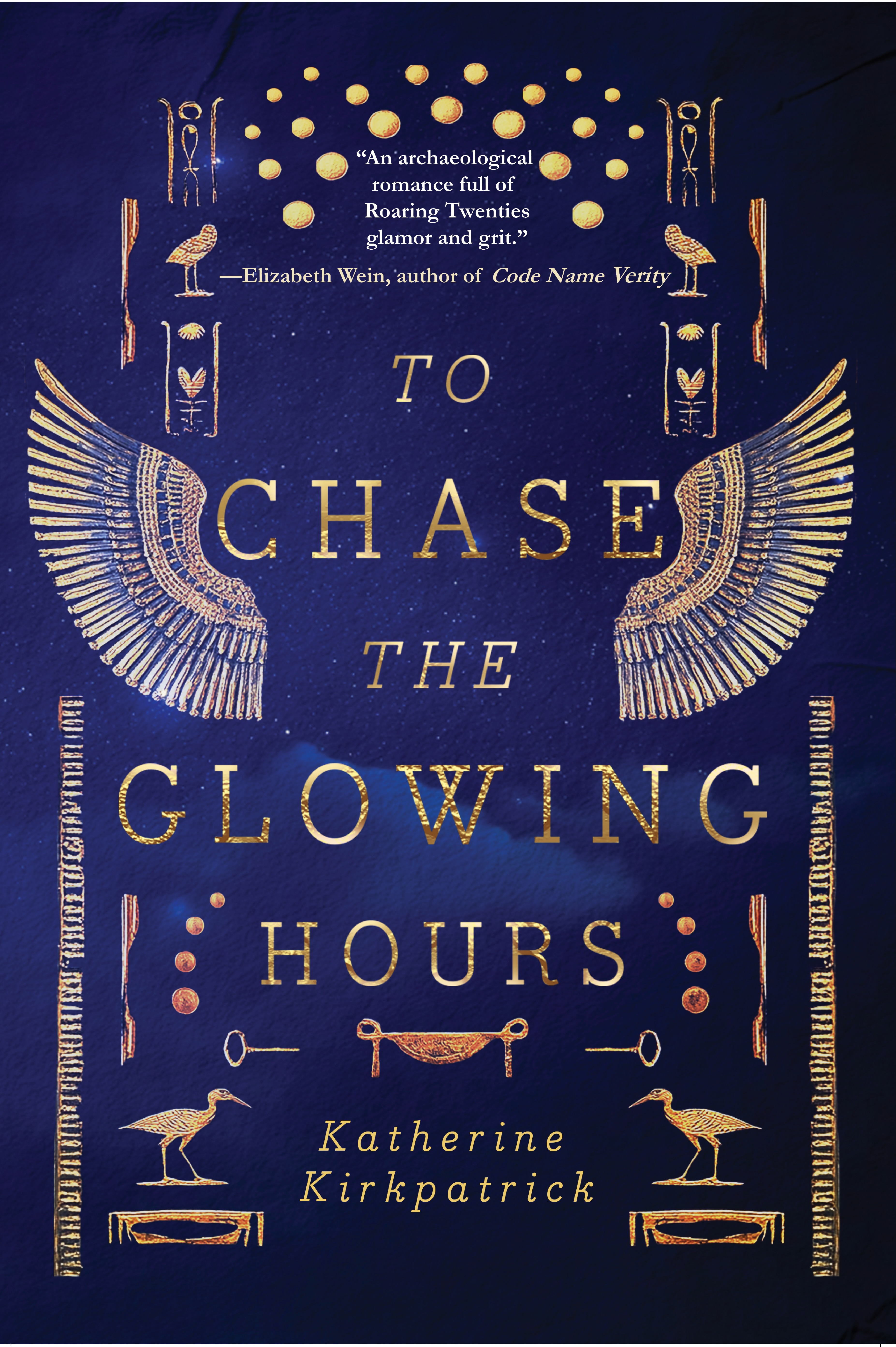
The Cover of My New Book

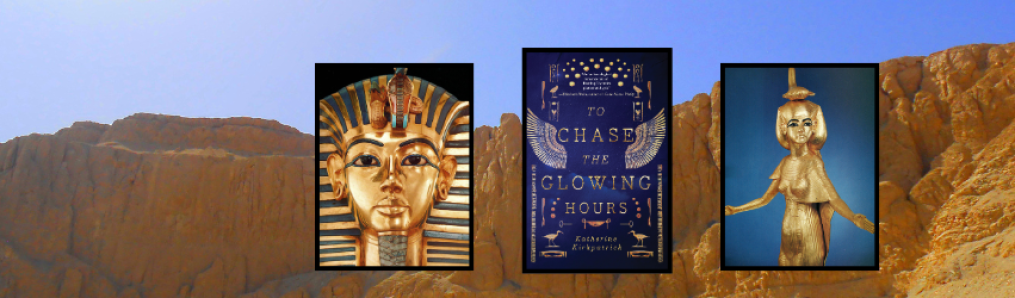
Dark blue was a favorite color in ancient Egypt. It is the color of the sky, home to the gods. Blue represents the cosmos and spirituality. It’s precious like lapis lazuli. I particularly like this color, so I am glad to see it featured on my new book cover.

Based on true-life characters and incidents, To Chase the Glowing Hours is a coming-of-age story about 21-year-old Lady Eve, who traveled in 1922 with her father, Lord Carnarvon, from her opulent home of Highclere Castle in the English countryside to the Valley of the Kings in Egypt. Her father’s hired archaeologist, Howard Carter, believed he’d found a royal tomb. A sealed doorway at the base of an underground stairway indicated that possibility. But of course, the phenomenal riches that Carter, Eve, and Carnarvon eventually uncovered would far surpass their expectations.

Gold was the color the ancients associated with royalty, divinity and immortality. King Tutankhamun’s tomb was filled with dazzling, golden objects, not least of them his solid gold sarcophagus. And since my novel To Chase the Glowing Hours (Regal House Publishing, September 2025) is about the Tutankhamun excavation, gold figures prominently on the cover. Gold also relates to the word “glowing” in the title.

The goddess Serket from Tutankhamun’s magnificent, gilded canopic shrine. Freepik.com

I wonder what Howard Carter would have thought of my book cover. As an exacting man who prided himself on his scholarship, he would have faulted its lack of accuracy. As attractive as the hieroglyphs are, they do not spell out an actual message. They are purely decorative.

Eve, however, would have enjoyed the cover. Her emotions and her senses guided her. Beholding Tutankhamun’s treasures as they emerged from the darkness was the greatest moment of Eve’s life. It wouldn’t have taken much to remind her of that experience—the warmth of a sunny day or the scent of perfume. The Egyptian theme of my book cover would have evoked a beautiful memory. 

For most people, enjoying ancient Egyptian culture is deeply connected to our senses. This is also true for me; however, reading books about Egyptian art has deepened my appreciation and understanding of it. Images that once puzzled me now resonate with clarity. Many Egyptian symbols relate to higher consciousness, immortality, eternity, and Oneness. These concepts are universal across various religions and hold personal significance for me.

Scarab design based on jewelry found in Tutankhamun’s tomb. Freepik.com

The pair of bird wings on the book cover resembles wings on scarabs. The scarab symbolizes rebirth. Wings lift the soul out of a discarnate body. The newly deceased pharaoh is often portrayed as a bird with a human head, as his soul is about to take flight. Deities are also depicted with wings; like birds, the gods and goddesses travel effortlessly throughout the cosmos. According to ancient Egyptian belief, we are soul travelers as well. There is a divine part in each of us that will ultimately express itself as starlight.

I hope you enjoy the deep blue and the elegant gold designs of the book cover. I especially hope you will enjoy reading To Chase the Glowing Hours. May the novel sweep you into the sensual world of King Tutankhamun’s treasures, ancient Egypt, and the worlds beyond.

The Art of Ink Painting

            Painting pictures is a nice change of pace for me. What I usually do is write very long books. My books involve a lot of research and require numerous rewrites. My forthcoming novel, To Chase the Glowing Hours (Regal House, Fall 2025), was in the making for twelve years before I received a contract to publish it. In contrast, I can usually create an ink painting in less than an hour. There’s a clear beginning, middle, and end to the process that feels very satisfying to me.

            I love the spontaneity of ink painting. I love the aesthetic of the art form. I love its simplicity. The goal of Chinese and Japanese ink painting is to capture the essence of something in a few bold strokes. You try to tap into the energy of your subject matter. You add only the details you want to be there.

“Red Crowned Crane” by Katherine Kirkpatrick.

            I’ve enjoyed making art ever since I was in high school, though I’ve let years lapse in which I did no drawing or painting. Twenty-three years ago, soon after my twins were born, I decided I wanted to learn Chinese ink painting. My family’s house has a view of a lake, and seeing the mist over that lake on cold winter mornings motivated me to paint the scene.

            I tried using regular watercolors on sturdy watercolor paper. To convey the mood of the mist and water, I diluted the paint. But I could not stop myself from outlining. My paintings looked tight and rigid. I remembered the softness of Chinese paintings on silk, the dark mountains emerging from clouds. How did those ancient Chinese artists create their atmospheric effects? My urge to learn their techniques was very strong.

            Through a Chinese community center, I found a teacher. His name was Long Gao and he taught out of his home. He’d been a professor of art in Beijing before moving to the U.S. His wife taught piano. Out of their many art and music students, most of them children, I was the only one who did not speak Chinese.

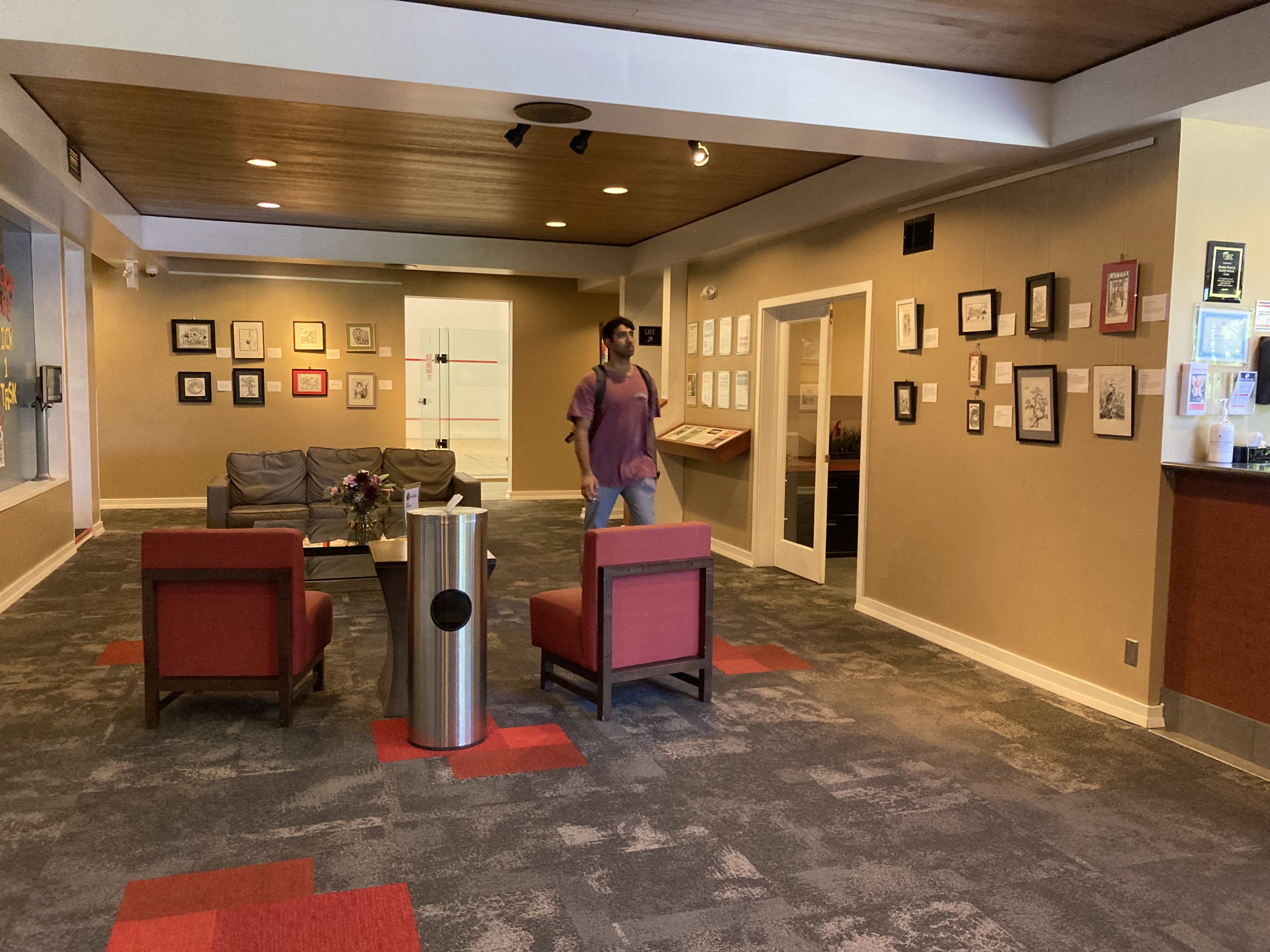
My art show in an athletic club.

            A stay-at-home mother, I had babysitting help twice a week for stretches of four hours. Once a week for several years, I had a private lesson from Long Gao. He is a phenomenal artist and a wonderful teacher. Ink painting is only one of his many mediums. He is well known as an oil painter and as a sculptor.

            Teacher Gao sold me a large sheep-hair brush, and two other brushes that were a combination of horse-hair, wolf-hair, and badger-hair. He showed me how to soak my brushes in water, and how to flex them so they’d slowly absorb the black ink. I learned that if I could load the ink on my brush in a certain way, each stroke I made on the rice paper presented several tonal values.

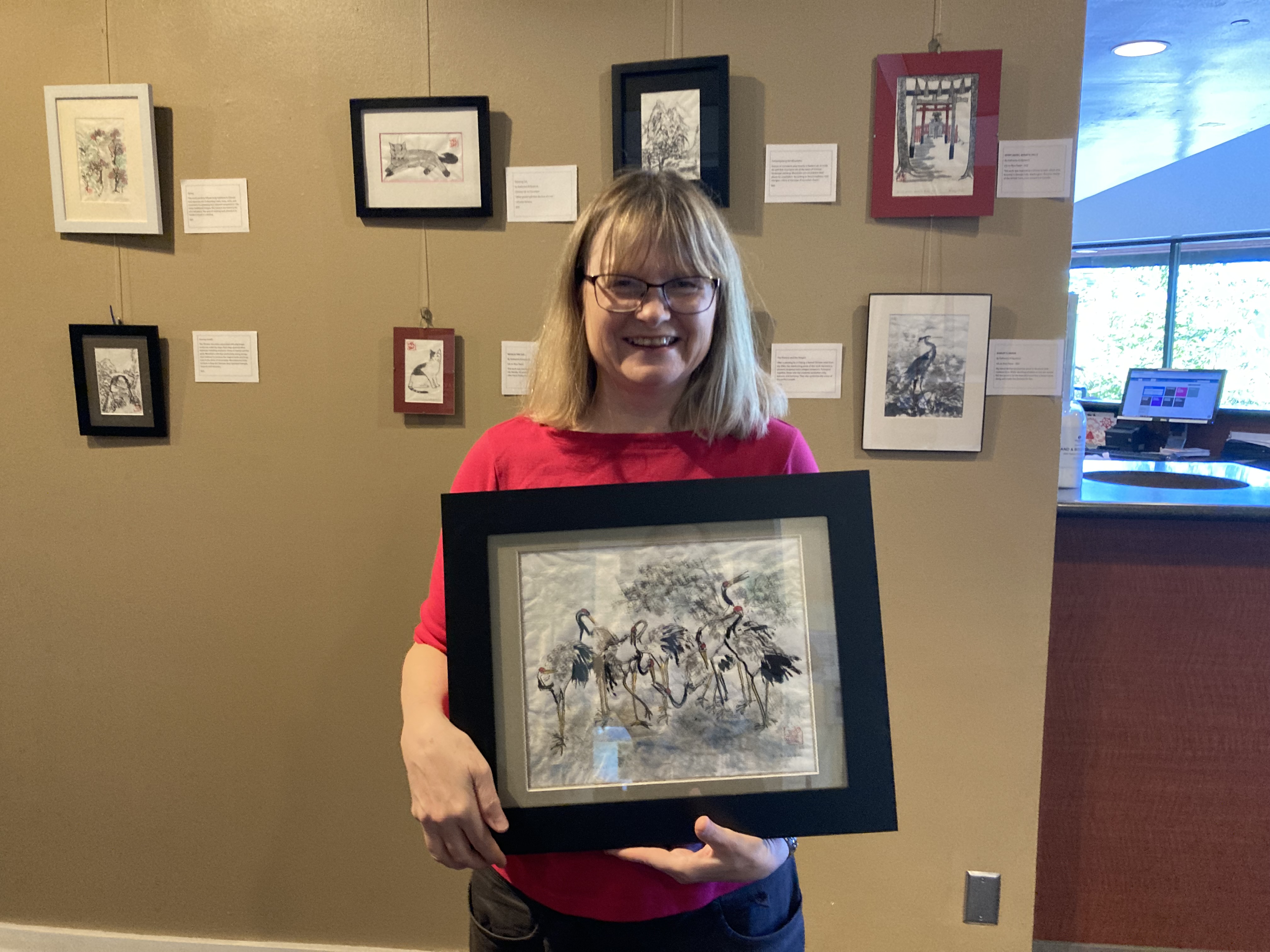
At my art show in the athletic club, holding a painting of cranes, “The Social Hour.”

            One of the first subjects I learned to paint was bamboo. We began with the stalk. “Paint in the direction that the bamboo is growing,” Teacher Gao said. He showed me how to push the brush forward, pausing between segments. “Paint with the energy of the heart going out through your arm, into your hand, and into the brush,” he taught me. Over time, I realized I was learning a spiritual practice akin to meditation, and that it was very important to paint from a state of inner quiet.

            One week, Teacher Gao placed a three-sided rock on his art table to serve as inspiration for painting mountains. Numerous mountains could be painted without dipping the brush into more ink. When the brush became drier, its ink came out lighter on the page. The lighter ink worked well for painting the suggestion of distant peaks. To create clouds or mist, I simply needed to leave white space between the forms of my mountains and peaks. This was the answer to the question that had started me on my journey of ink painting.

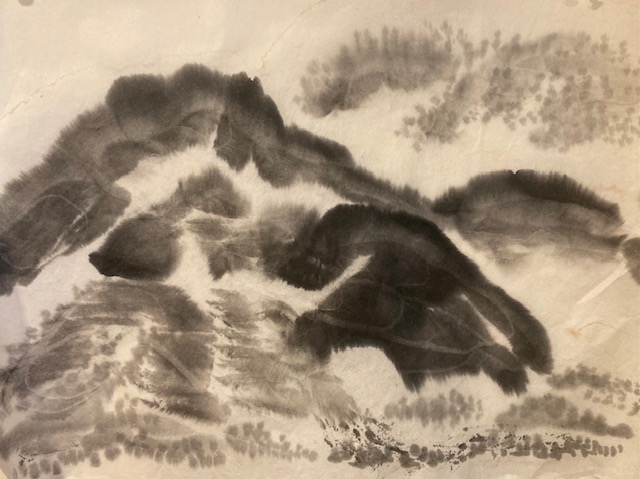
One of my first ink paintings.

            Teacher Gao carved my beautiful chops (printing stamps). He created an image of twin birds in honor of me being the mother of twins. The other image, designed with Archaic Chinese characters, is a Buddhist name I was given many years ago by a Soto Zen master in New York: Ro-ki (Japanese) or Ro-chi (Chinese), meaning “bright life force.”

            I was very lucky to have studied traditional ink painting with Teacher Gao, and I think of him every time I “sign” my paintings in red with the chops that he made.

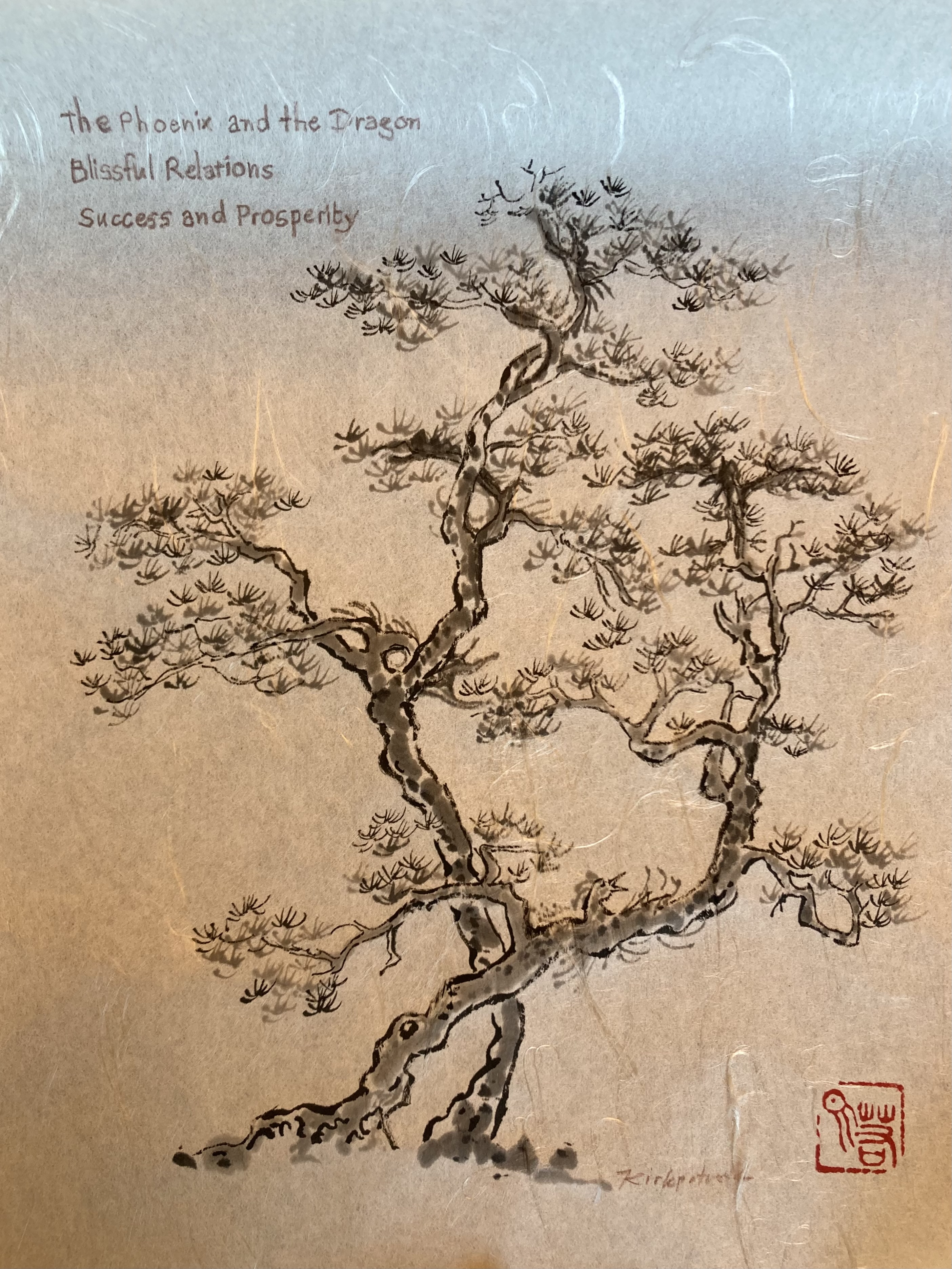
“The Phoenix and the Dragon” by Katherine Kirkpatrick after Li Cheng (919-967 A.D.)

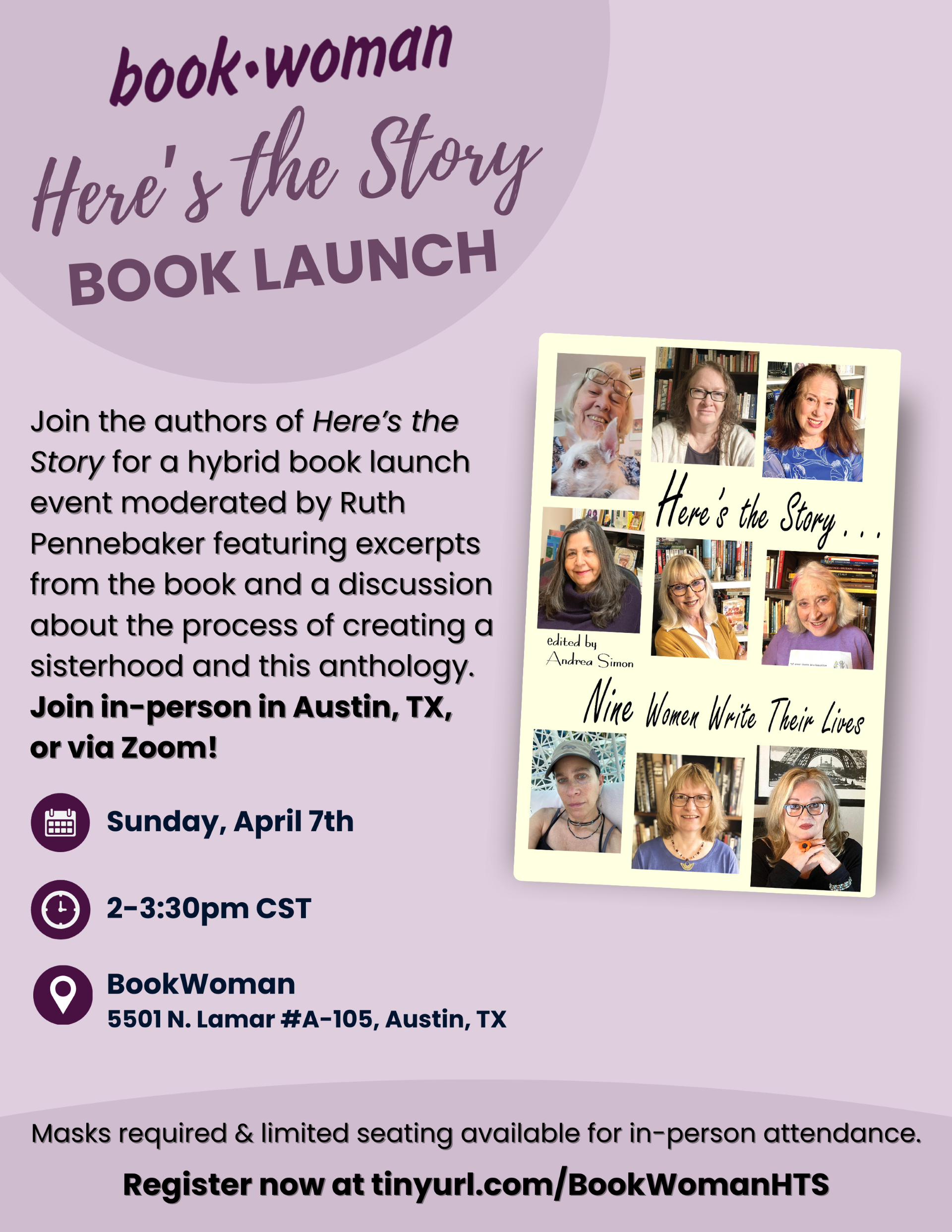
Here’s The Story Book Launch, April 7

Greetings, friends,

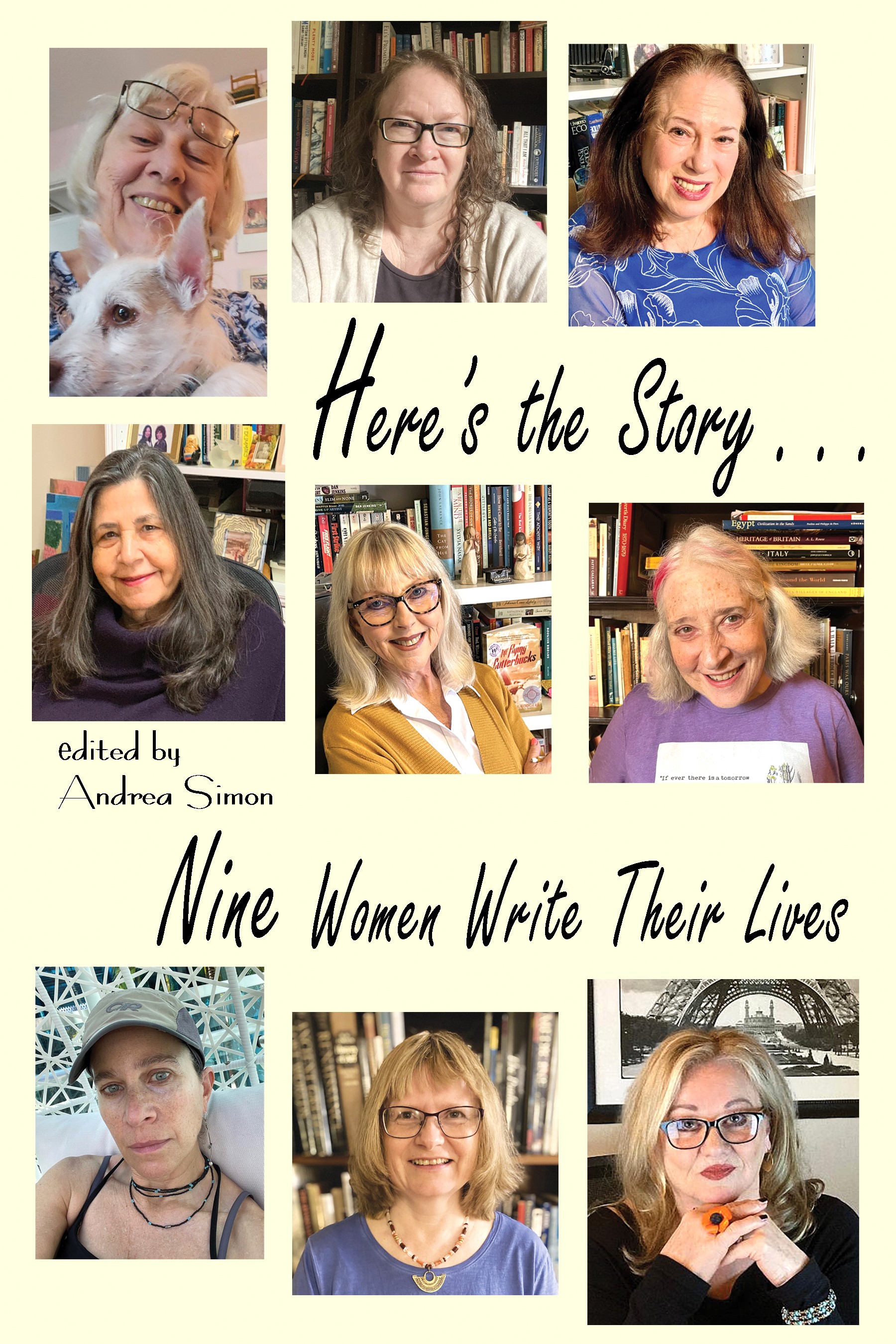
I’m happy to tell you that I have a new book out as of March 5, 2024, Here’s The Story. . . Nine Women Write Their Lives, edited by Andrea Simon and published by Bedazzled Ink. The book evolved from a writing class taught by Andrea at Story Circle Network, https://www.storycircle.org. In this class, I joined old friends and made new friends, all fabulous writers and people. If you identify as female and are aspiring to write and publish, check out the Story Circle Network. The other authors represented in our anthology are Amy Baruch, Stephanie Cowell, Linda Aronovsky Cox, Karen Finch, Jane Mylum Gardner, Rhonda Hunt-Del Bene, Kathleen M. Rodgers, and Andrea Simon. My three essays in the collection are as follows: 

—“Book Parties a La Audrey Kirkpatrick” tells how my late mother indulged me by inviting nearly the whole town of Stony Brook, Long Island to dinner when I had a book published. 

—“Dad’s Last Blessing” is about my late father, Dale Kirkpatrick’s passing in 2005, the very same weekend my brother, Sid, and sister-in-law, Nancy married.

“I Mak Siccar (I Make Sure) about my infamous ancestor Roger Kirkpatrick and the fun (if gory) traditions of our Kirkpatrick family reunion.

You can order Here’s The Story. . . from Bedazzled Ink:

https://www.bedazzledink.com/heres-the-story.html

You can order Here’s The Story. . . from Amazon 

(This is a new, viable link.)

We have an online book reading coming up on Sunday, April 7  (noon West Coast time, 2 p.m. Central time, and 3 p.m. East Coast time) and for those of you in Austin, Texas, you can attend the event in person. To join us, register at  https://www.eventbrite.com/e/bookwoman-presents-heres-the-story-book-launch-hybrid-tickets-821755471737?aff=oddtdtcreator .

Hope to see you there!

Here’s The Story. . .

I’m happy to announce the forthcoming publication of Here’s The Story. . . Nine Women Write Their Lives, edited by Andrea Simon, Bedazzled Ink, pub date March 2024. I have three essays in this anthology: “Book Parties a la Audrey Kirkpatrick,” about my mother’s lavish generosity, culinary and otherwise; “I Mak Siccar (I Make Sure),” about my extended family reunions; and “Dad’s Last Blessing,” about my brother’s wedding and my father’s memorial service, which unexpectedly occurred in the same weekend. The collection evolved from an online writing class I took through the Story Circle Network.

Advance praise for Here’s The Story. . . Nine Women Write Their Lives:

“These stories encompass a wide range of lifetime experiences, from childhood memories to adult challenges to literary pursuits to coping with the pandemic. Each story in this collection is told with a refreshing blend of honesty and openness, infused with the author’s authentic voice. By delving into their personal challenges, the authors not only invite readers to empathize with their struggles but also encourage them to view their own trials from a fresh perspective. The power of storytelling as a form of healing resonates throughout this heartfelt volume, offering a soothing balm to readers. I highly recommend finding a comfortable spot, putting up your feet, and delving into this eye-opening and powerful collection. These stories provide firsthand insight into the personal growth that can be achieved when taking the risk to share and connect with others through writing.” —Helen (Len) Leatherwood, president and online class coordinator, Story Circle Network

Here’s the Story. . . Nine Women Write Their Lives is a charming and heartfelt collection of essays, stories, and poems by and about women.  The narratives engage the reader on a wide variety of issues yet often come back to themes central to the lived female experience: girlhood memories, struggles with our mothers, the passions that enlist and enliven our imaginations, how we survived the pandemic.  Each piece of writing represents a labor of love shared by the contributing authors and sets the reader on a soul-searching path of self-reflection and self-discovery.  This is a highly enjoyable and thought-provoking read that celebrates the female experience even amidst stories of pain, loss, and heartbreak.” —Mary Caputi, Ph.D., feminist, professor, and author of Feminism and Power: The Need for Critical Theory

Here’s the Story is an absolute pleasure to read. This extraordinary essay collection from a remarkable group of writers takes on all aspects of life, the good and bad, mothers included.”—DV Stone, author of No Past Tense: Love and Survival in the Shadow of the Holocaust and A Fairy Tale Unmasked: The Teacher and the Nazi Slaves

“Originating in a class called “Writing about Your Mom without Guilt,” the stories, essays, and poems in this anthology range far beyond the mother-daughter dynamic. Surprising, provocative, exciting, this collection brings together a group of writers whose wisdom shines through. Whether describing Covid-era lockdowns, childhood friendships, or the art of writing, the nine authors’ work will draw you in, envelop you, and make you want to keep reading until the end.”—Deborah Kalb, writer, editor, book blogger, and author of the novel Off to Join the Circus 

“So many of our lives and our families’ experiences are unknown and untold. Read this wonderful collection of voices, then ask yourself what stories you, too, haven’t told yet. We all need this kind of inspiration.” —Ruth Pennebaker, essayist, public radio commentator, and author of the novel Women on the Verge of a Nervous Breakthrough

Hope you will enjoy this anthology. May it inspire you to write your own story!

William Sidney Mount Presentations Now Available

Authors Katherine Kirkpatrick and Vivian Nicholson-Mueller will give an overview of William Sidney Mount’s paintings that feature Black and multiracial people, and present their original research involving Mount’s real-life models.

For more information, please contact Katherine via this website.

Past venues for this talk have included:

The Long Island Museum, Stony Brook, NY

The Ward Melville Heritage Organization, Setauket, NY

The Floyd Memorial Library, Greenport, NY

The Three Village Historical Society, Setauket, NY

The Longwood Library, Middle Island, NY

A Charmed Week

            For about a year and a half, but mostly within a week in July 2021, I experienced a series of fortuitous incidents when I was researching and writing my book The Art of William Sidney Mount: Long Island People of Color on Canvas (coauthored with Vivian Nicholson-Mueller, publication date September 5, 2022, The History Press). The book involves the Black and biracial people who modeled for William Sidney Mount, a famous 19th century artist. Mount lived and worked in the Three Village (Stony Brook, Setauket, and Old Field) area in Long Island, New York, where I grew up. My wonderful sister, Jennifer, and I rented an Air B & B together in Stony Brook so she could take photos of old houses for the book, gather materials for the map she would draw, and most of all, for the two of us to have fun together in the setting that is very dear to both of us. I live in Seattle and Jen lives in Virginia, and it was the first one-on-one vacation we’d had in many years apart from our husbands and families.

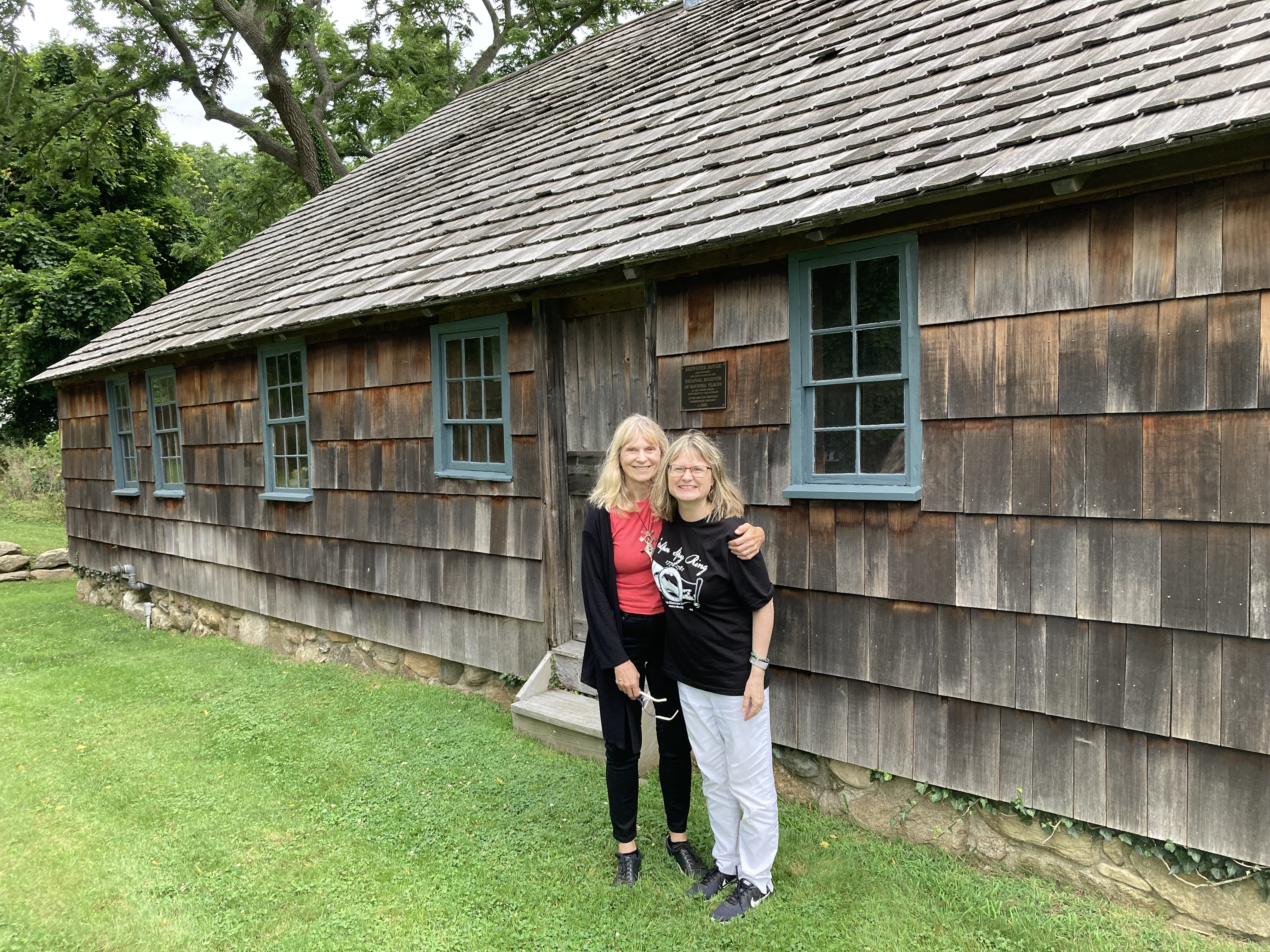
Jen and I pose in front of the Brewster House in Setauket.

            Here are some examples of synchronicity:

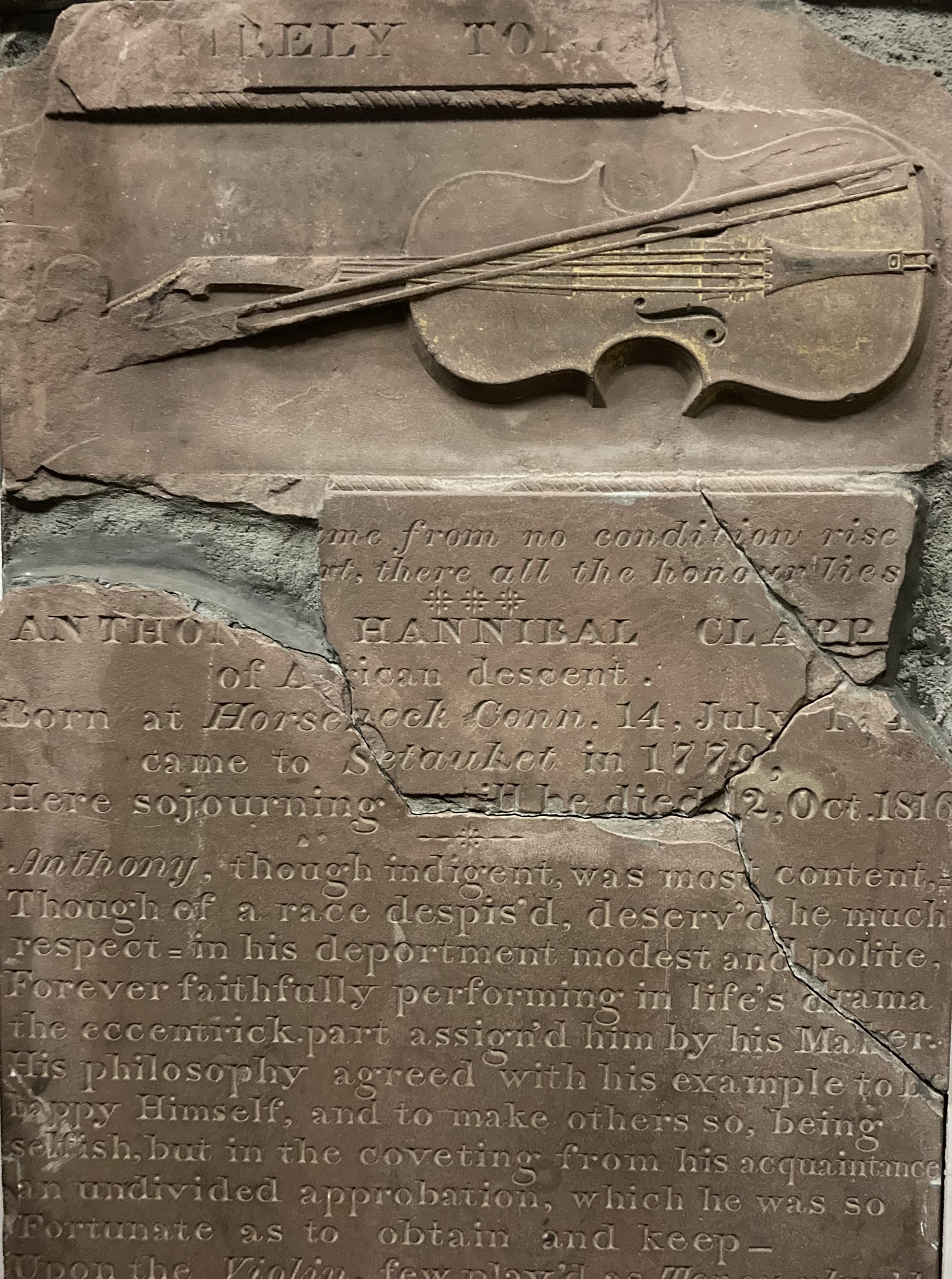
            Mount recalled childhood experiences of knowing a Black fiddler, Anthony (Tony) Hannibal Clapp (1749-1816), and sitting at Clapp’s knee while he played folk tunes. Clapp was buried in a cemetery for people of color on land that used to belong to Mount’s grandfather. I’d read an article about an unnamed Stony Brook resident finding that overgrown cemetery in land behind his back yard. One day, about a year and a half ago, while texting my coauthor, Vivian, about Anthony Clapp, a Facebook Messenger text came in for me at the very same time from a school friend, Bob, who wanted to tell me about a webinar he thought I’d enjoy. For the first time in decades, I talked to Bob on the phone. I told him about the Mount book I was writing. He told me about the cemetery he’d discovered in back of his house. You guessed it—Anthony Clapp’s grave site! 

Anthony Hannibal Clapp’s gravestone, carved by Phineas Hill, circa 1816, the Long Island Museum of American Art, History and Carriages Collection, 0007.015.2140. Photo by Katherine Kirkpatrick.

           Jen and visited Bob and his wife, Anna, and they showed us the cemetery. While there, I told Bob I was hoping to see a house in Stony Brook where William Sidney Mount’s sister (and people who are likely portrayed in Mount’s Dance of the Haymakers) lived. I had an address from the 1970s; for all I knew, the house could have been torn down. Bob knew the house and its owner, and drove my sister and I over to it. The owner, named Rich, said to my surprise, “I know you! I was your father’s chauffeur.”

            What chauffeur? My sister, Jen, and Rich filled in the story. My dad, Dale Kirkpatrick, broke his neck two years before I was born while teaching my brother to dive off a diving board at our beach club. Rich was the teenage son of my dad’s chiropractor. While Dad’s neck was in traction and he couldn’t drive, he employed Rich to take him places. Rich turned out to know a lot about William Sidney Mount and gladly showed Jen and Bob and me around the house. 

            Within a day of that visit, I had another serendipitous meeting, this time in Stony Brook’s Crazy Beans restaurant. Months earlier, I’d written to the head of a local preservation organization through a general website contact, but did not get a response. Attempts at obtaining the director’s email address had failed. I wanted to meet her because she was in charge of an old house, now a museum, where several of Mount’s models had lived. While Jen and I were having brunch with one of my longtime school friends, Paul, we were suddenly surprised when Leighton, another longtime school friend, strolls in—accompanied by the organization’s director. 

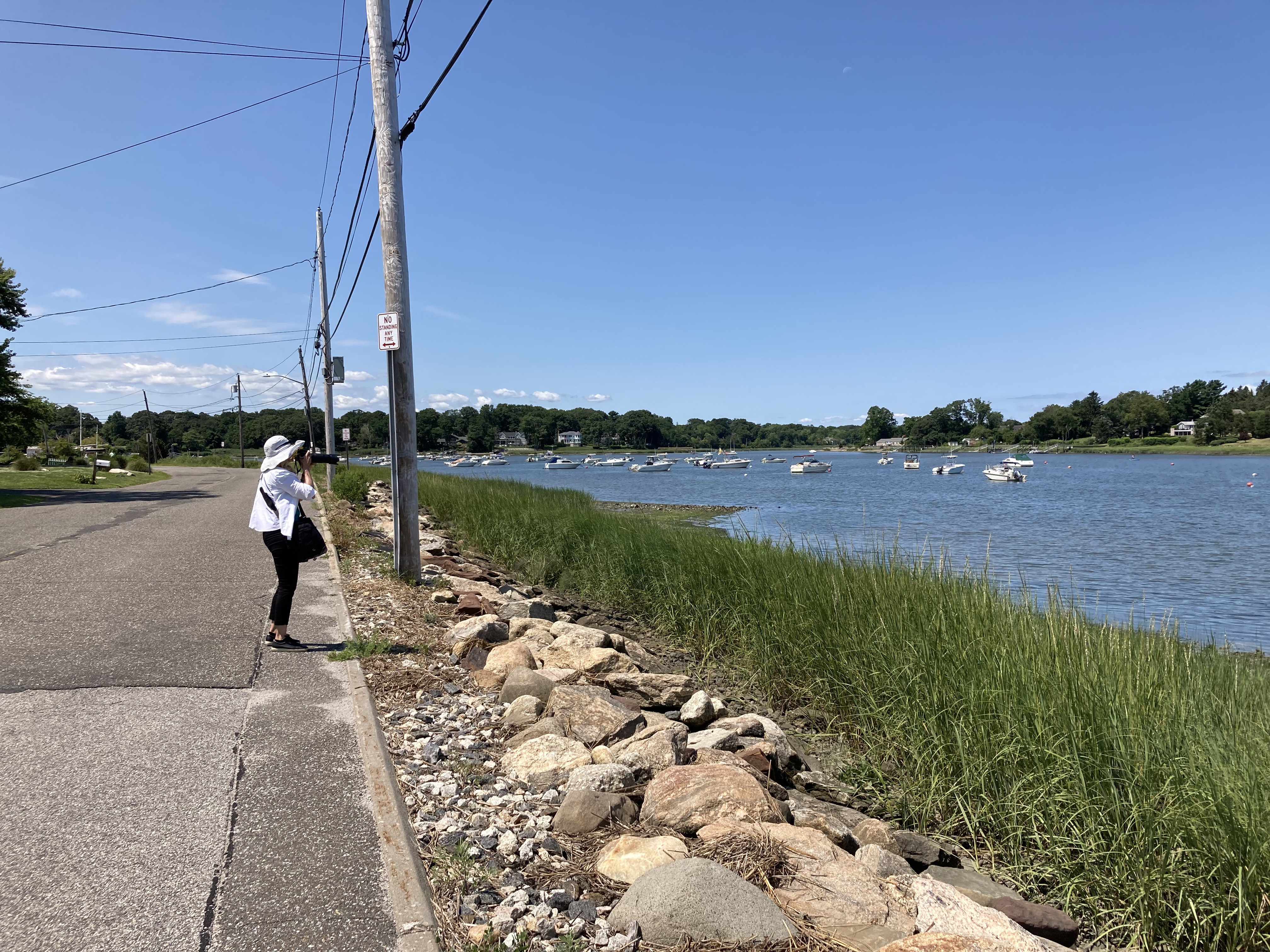
            Another day that week, Jen and I hiked along the narrow strip of Setauket’s Shore Road in a quest to find out where William Sidney Mount had been situated when painting Eel Spearing in Setauket in 1845. Looking across Setauket Harbor at Strong’s Neck, we searched in vain for St. George’s Manor, the house depicted in the artwork. A lot of trees had grown up and houses built since Mount’s time. Barbara, Brookhaven Town’s Historian, happened to be driving by in her convertible on the way to playing golf. “I recognize you two!” she said, pulling the car aside. We’d visited her the day before at her office in Farmingville. As it turned out, Barbara had grown up on Shore Road. She took us to a place where we could see the manor; as it was barely visible in the summer’s foliage, we wouldn’t have spotted it on our own.

Jen taking photographs on Shore Road, Setauket.

            There are numerous other examples of synchronicity related to this project; I’ll tell you just one more. Jen and I ran into a family friend, Megan, while visiting the Long Island Museum. We were surprised to hear that Megan was employed by the museum. Last we’d heard Megan was living and working in Manhattan. She’s now in charge of reopening the museum’s gift shop, and is involved with a book event for me that will take place on October 2, 2022. 

            Out of my nine published books, The Art of William Sidney Mount: Long Island People of Color on Canvas is the only title to go into print within a year of contract. In most cases I experienced a lag of at least three years. I ask myself how I could be so lucky in regard to this book, while I’ve encountered many obstacles for other projects. Arguably, there’s a certain ease that comes about when choosing a subject related to one’s hometown. My late parents, Audrey and Dale Kirkpatrick, were very active in the Three Village community. Still, does my family’s wide network of acquaintances and friends explain the nature and timing of my experiences?

            My friend author Andrea Simon uses the Yiddish word bashert (orchestrated by God) to describe a certain kind of synchronicity, in which things easily fall into place in uncanny ways. Was I experiencing bashert? I’ll leave it at this. I believe there are periods in our lives when we are particularly in the flow, and when we are particularly receptive to being in the flow. I believe that when we are relaxed and happy, as I was when I was enjoying time with my sister, that fortuitous occurrences are most likely to take place. 

            May the synchronicity related to my project continue. I’m hoping that the stories in the book connect descendants to their ancestors and descendants to each other. And I’m hoping for further opportunities to reconnect with those from my Three Village past.  

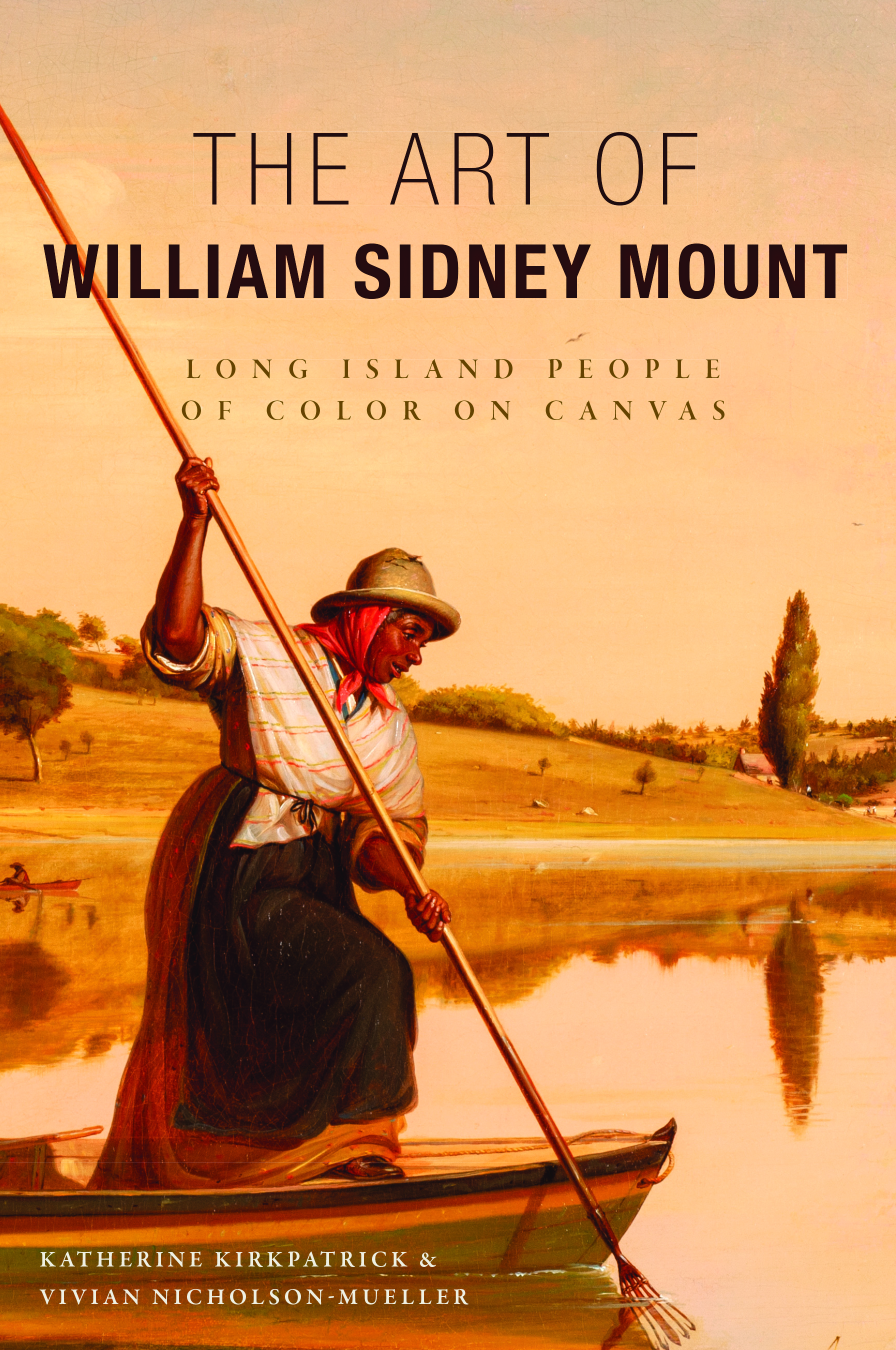
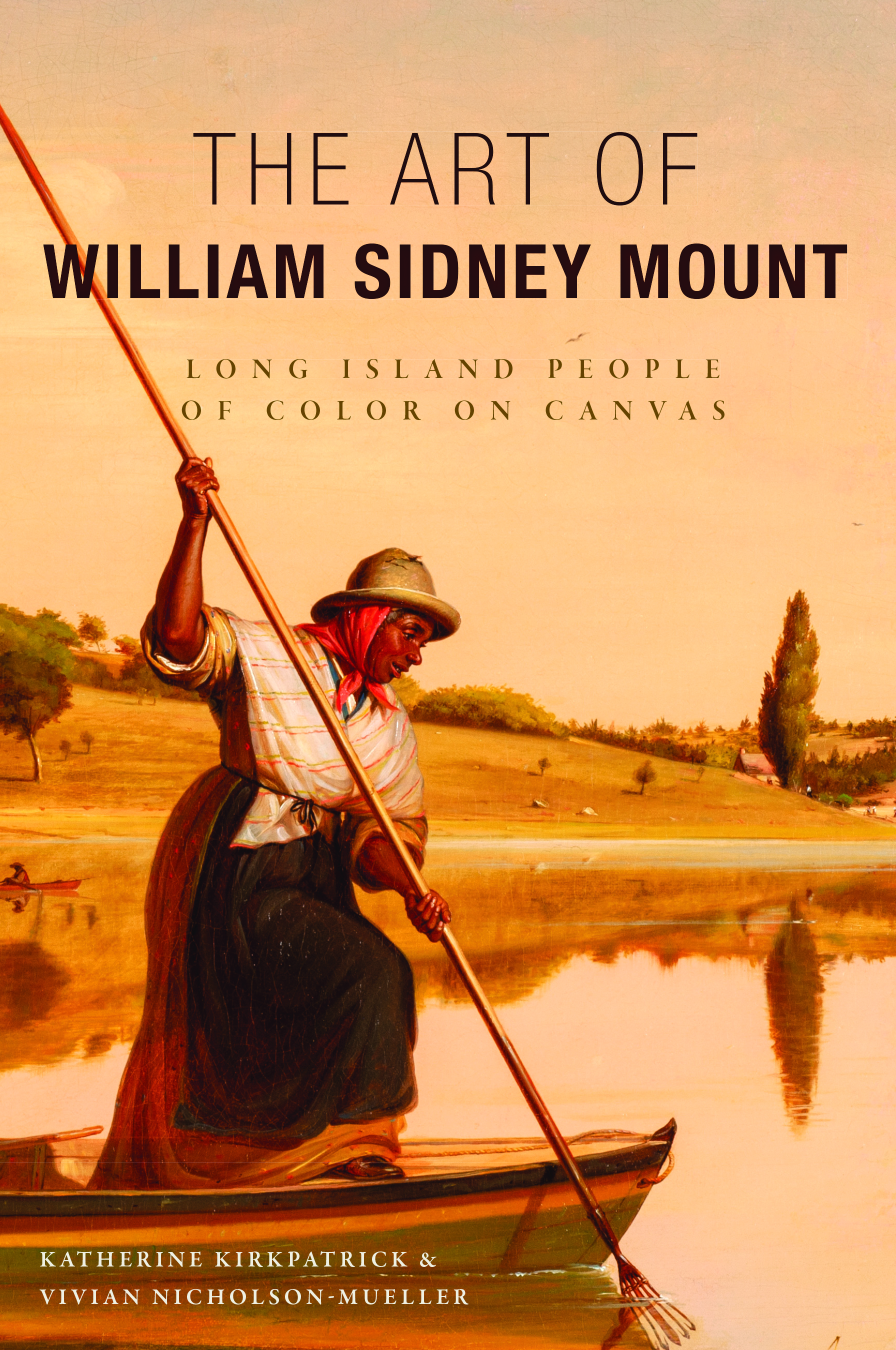
Cover for The Art of William Sidney Mount: Long Island People of Color on Canvas by Katherine Kirkpatrick and Vivian Nicholson-Mueller (The History Press, publication date September 5, 2022). Detail from Eel Spearing at Setauket (Recollections of Early Days–“Fishing Along Shore”), 1845, by William Sidney Mount (1807-1868). Collection of the Fenimore Art Museum, Cooperstown, New York. Gift of Stephen C. Clark. Photograph by Richard Walker. N0395.1955.
Serving as a Mentor for SCBWI

Serving as a Mentor for SCBWI

It’s my great honor to be a mentor for middle-grade and young-adult fiction by the Society of Children’s Book Writers and Editors (SCBWI), Western Washington chapter, for the 2021-2022 season. Applications for the program from the SCBWI membership are accepted from now through July 30. The mentors and mentees will work with each other for a six-month period, beginning in September 2021 and ending in May 2022. For more information, learn more here .

SCBWI Western Washington will be publishing interviews of their mentors in their bulletin. My interview follows.

Why do you like mentoring? 

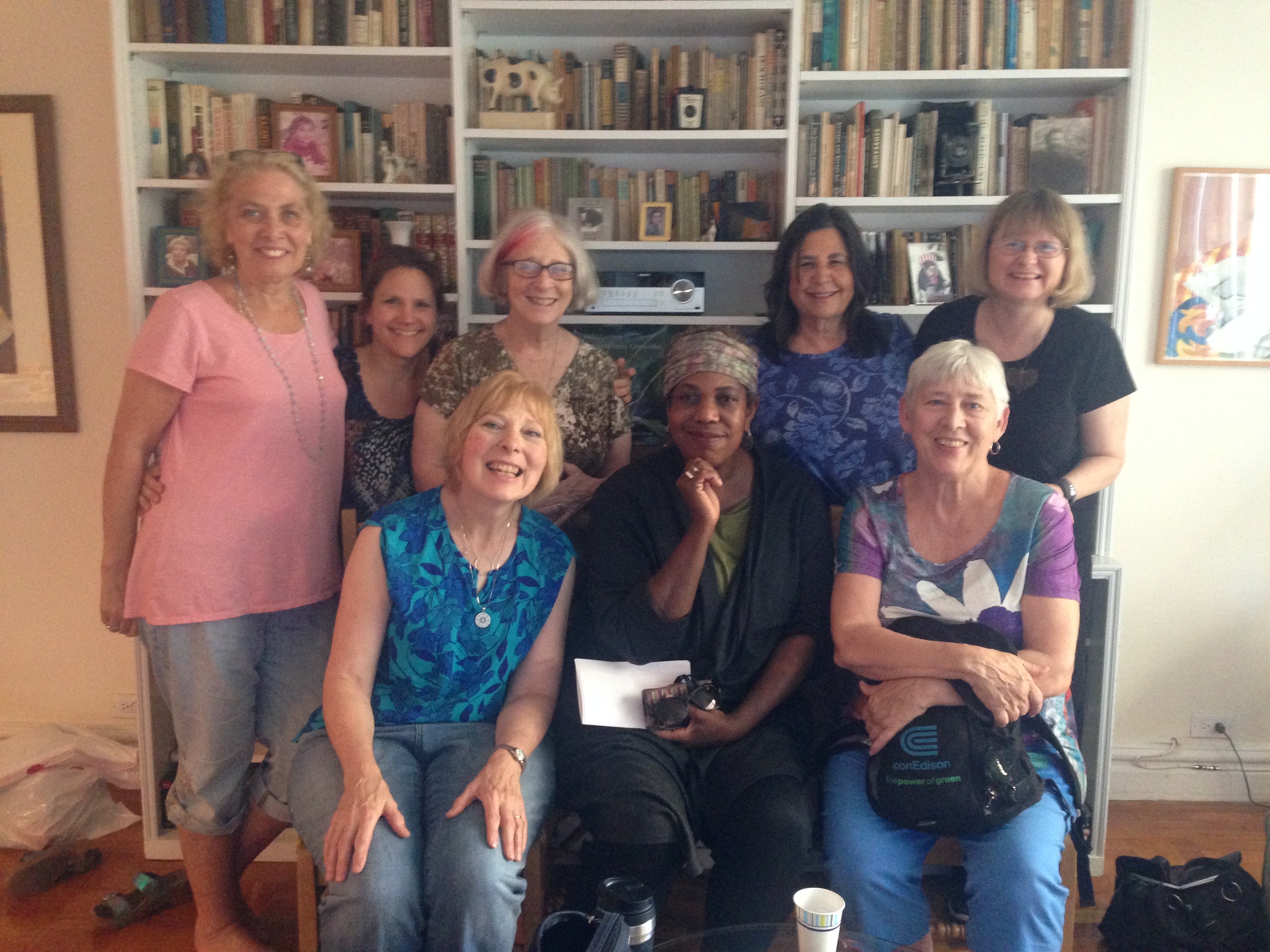
When I was a young woman, I was lucky to be mentored by Madeleine L’Engle, author of the classic A Wrinkle in Time. She encouraged all her workshop students to succeed in our writing endeavors. She taught us “belief.” She set a tone to be supportive of each other. A writers’ group of seven women formed from the first workshop I took with Madeleine, and more groups evolved from other workshops. Soon we had a community. At that time, none of us had any books published. Dozens of books followed, including eight of my own. Thirty years later, we are still cheering each other on, now weekly on Zoom. It gives me pleasure to foster others with the same generosity of spirit that Madeleine offered. 

Dear friend Sanna Stanley, our beloved mentor Madeleine L’Engle, and me.
My writing group of 30 years.

What can a mentee expect from your mentorship?

My aim is to help my mentees discover and nurture their writing skills. We’ll discuss their goals for our six-month time together. We’ll set dates on calendars and decide together the best method of communication, hopefully cemented by occasionally meeting in person, depending on our locations and Covid restrictions. If the mentees have a workable idea or partial manuscript, we’ll brainstorm to help them decide about plot, structure, characters, point of view, and other fundamentals. I have handouts and exercises that will be helpful in creating synopses. We will discuss the plots of books and movies in the mentee’s genre and what principles and techniques the authors employed. 

When the mentees have manuscripts ready and want feedback, I’ll make notes on the manuscripts and produce comprehensive “editorial letters” with constructive comments on improving the manuscripts. I’ve worked on staff for several children’s book publishers in New York and will provide a high level of professional analysis. 

What are the best parts about being an author(-illustrator)? 

I love doing research, whether it’s in the library sleuthing around in dusty archives, using old maps, searching online, or reading books and taking notes. Sometimes I take trips. Once I served as a volunteer crewmate on a schooner for a week. By far the most inspiring trip I took was to Egypt to research my future novel Golden Treasure. I flew over the Valley of the Kings in a hot-air balloon. For this same novel, I visited Highclere Castle in England and met the Countess of Carnarvon. 

Researching my novel at Highclere Castle.

It’s exciting to receive a bound book in the mail for the first time. I was delighted to see my book  The Snow Baby, which has a gorgeous cover and design.

What’s the writing/illustrating advice you give most often?

Never give up. Writing is a journey. Let your friends and mentors uplift you when you’re discouraged. Find a writers group, or start one, but make sure the members are supportive and affirming. Set small goals and accomplish them. Try not to expect too much of a rough draft. Don’t judge it harshly. Instead, let your book evolve. 

What does being a successful published professional look like to you?

Success has meant different things to me over the years. It has thrilled me to receive starred reviews, to be published by Random House, to be invited to a fancy reception with famous authors in New York’s Rainbow Room during an American Library Association conference, to have a book optioned for film. But experiences like this have been few and fleeting. 

On the set of the film trailer for Redcoats and Petticoats.

What gives me the greatest satisfaction is to celebrate milestones with friends and family. These pleasures are long lasting. My late mother used to host book events for me and invite up to a hundred people, including my former teachers. She encouraged invitees to stop by the bookstore or museum shop and purchase autographed copies, and continue on to her house for a gourmet meal.

What are you working on next? 

My collaborator and I are working on a nonfiction book about the people of color, including her ancestors, in a community on Long Island in the 19th century. I feel very galvanized by this project, to reveal the names of people long forgotten. And it feels so satisfying to know that there’s an audience that will truly appreciate this book. 

A New Cover for Trouble’s Daughter

A New Cover for Trouble’s Daughter

What happens when a book goes out of print? In the olden days, that was that. But nowadays you can reissue the book yourself via print-on-demand (POD) publishing. One of the pleasures of this route is to choose your own cover for the book. 

For years I’d thought of reissuing my young adult novel Trouble’s Daughter: The Story of Susanna Hutchinson, Indian Captive. Part of my reluctance was due to the computer-related challenges. I also had to choose a new cover because I didn’t have the legal right to use the one made for the Delacorte and Dell Yearling editions of the book. It’s relatively easy to find stock images at little or no expense. But I wanted a professional book illustrator, though I didn’t have the kind of money to pay one.  

So, the Trouble’s Daughter reissue remained on hold for a decade until recently when a small miracle occurred. One of the descendants of my true-life protagonist, Susanna Hutchinson Cole, came into my life and took a great interest in seeing the book return to print. Captain Robert K. T. Cole, Jr. (retired, U.S. Marines, and Purple Heart recipient) contacted me through my website to request more information about his ancestor Susanna, who married his fourteen-times great grandfather John Cole. The Captain was also researching Susanna’s more-famous mother, Puritan firebrand Anne Hutchinson. Our correspondence began. He wanted to purchase autographed copies of Trouble’s Daughter for his children and grandchildren. It was a pleasure to sell him the fifty remaindered hardcovers I’d been stashing in my attic. Almost unbelievably, the Captain sought to buy even more copies so we eventually got into the discussion of how that might be possible through a print-on-demand venue such as Amazon’s KDP Publishing.  

Captain Robert K.T. Cole, Jr.

It was my great joy and privilege to hire, with the Captain’s financial help, the talented artist Ronald Himler, to paint the new cover art for Trouble’s Daughter. Ron illustrated my book Redcoats and Petticoats twenty years ago and we’ve been friends ever since. I also engaged a professional art director (and artist), my friend Christy Hale, to work with him. You see the happy result here. The Captain now owns the original painting. 

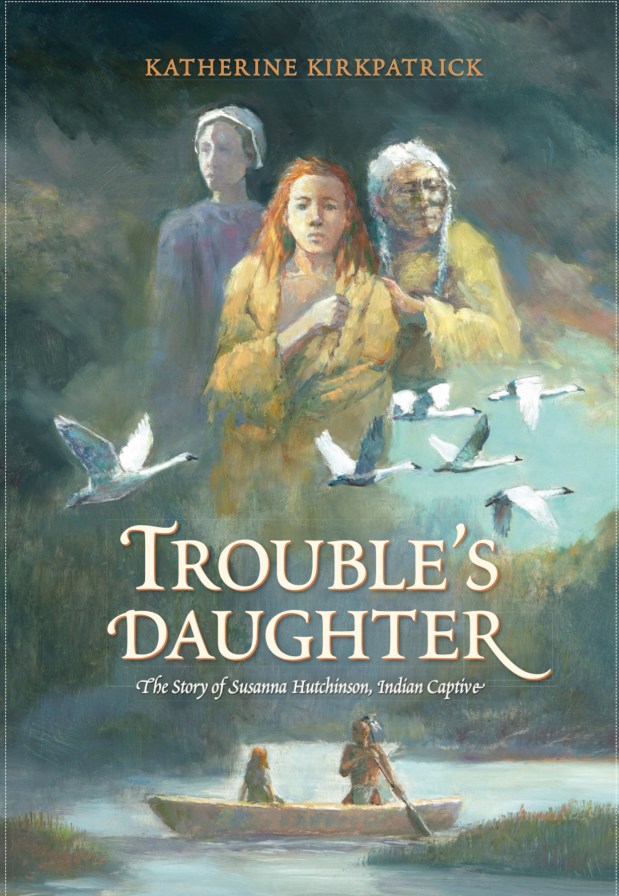
Ron read Trouble’s Daughtercame up with a few cover concepts and allowed me to pick the one I liked best. I’ll explain the artwork. Susanna, whose original clothes had been burned by her captors, wears a deerskin cloak. The clouds behind her reflect her inner emotional tension. As the clouds descend to her right, the sun breaks through behind the misty inlet on which a Lenape warrior, Wam-Pak, rows a dugout canoe with Susanna sitting in front. Separated from her family, who were murdered in a massacre, she does not know what the future has in store for her. The two women behind her, her mother in Puritan garb, and the wise woman, Som-kway, represent the most important influences in her psyche. The swans, one of Susanna’s totem animals, express her wish to be free of emotional conflict.  

Ron Himler

I couldn’t be more pleased with the new cover art. I’m also happy that after much effort the technical challenges of launching the new edition onto the Amazon KDP website have been overcome. Susanna, again, has the promise of new life.

Now comes the fun of ordering books. If you want your own copy, it’s available as a paperback as well as an e-book. A hardcover edition through Ingram is in the works.