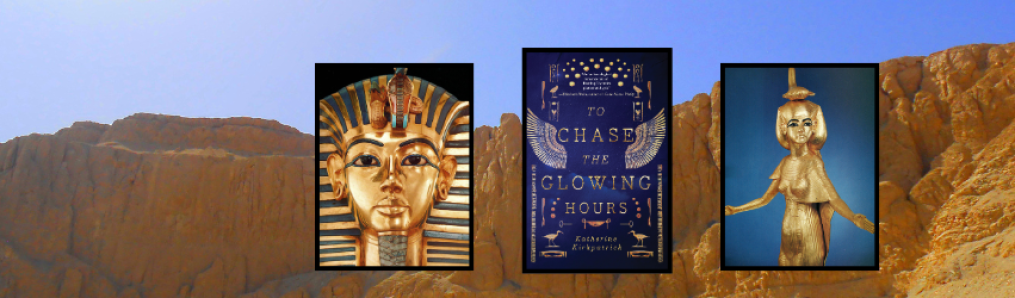
Katherine Kirkpatrick’s Historical Novel Society Interview

INTERVIEW BY KAREN DRURY for The Historical Novel Society

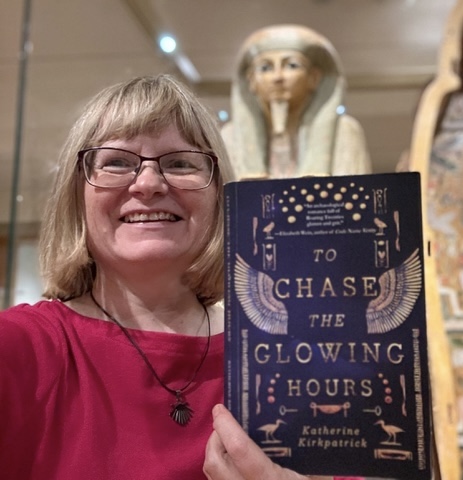
Katherine Kirkpatrick is the author of ten books, both fiction and nonfiction. When not flying over the Valley of the Kings in a hot air balloon or exploring the secret cabinets of Highclere Castle, she can be found at her computer in Seattle, Washington. Check out Katherine’s YouTube videos on the To Chase the Glowing Hours playlist.

How would you describe this book and its themes in a couple of sentences? 

To Chase the Glowing Hours features the real-life residents of Highclere Castle, the manor made famous in the Downton Abbey television series and films. Lady Eve, the 21-year-old daughter of the Earl of Carnarvon, travels from her opulent home in the English countryside to the Valley of the Kings in Egypt. There, she hopes to realize her father’s dream of finding an intact royal tomb, that of King Tutankhamun. Amidst the excitement of her adventure, Eve finds herself drawn to the brilliant yet temperamental archaeologist Howard Carter. Set against the alluring and glamorous backdrops of Egypt and England in the 1920s, the novel explores themes of love, grief, loss, privilege, and self-discovery.

What inspired you to write this novel?

My fascination with ancient Egypt began as a young child. In 1977, my parents took my family to see the Tutankhamun exhibition at the Metropolitan Museum of Art (MMA) in New York. I stood before Tut’s gold mask, mesmerized. Years later, as I wrote To Chase the Glowing Hours and envisioned Lady Eve entering the tomb, I tried to convey the same sense of wonder I’d felt at the Metropolitan Museum.

My beloved brother, the late author and filmmaker Sidney Kirkpatrick (see SidneyKirkpatrick.com), introduced me to the subject of Lady Eve and suggested I write her story. He learned of Eve when he was interviewing Thomas Hoving, a former director of the Metropolitan Museum of Art. Hoving’s book Tutankhamun: The Untold Story contains an intriguing footnote that became the basis for my novel. Hoving found Lady Eve’s letters to Howard Carter in the Metropolitan’s archives and remarked on their gushing tone.
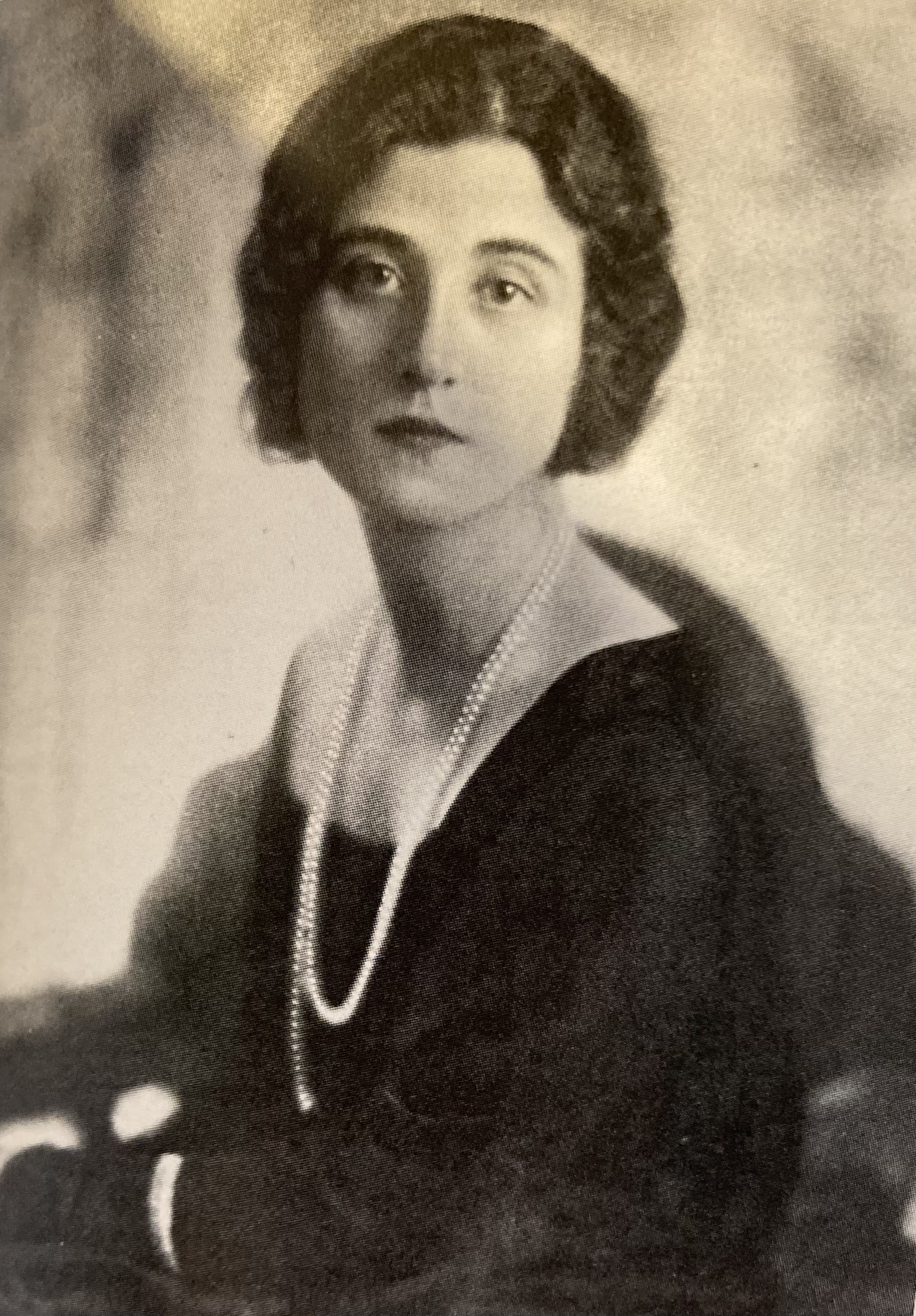
Lady Evelyn Herbert, daughter of the Earl of Carnarvon of Highclere Castle

Would you consider writing the Egyptian side of the story? 

Great idea! Someone Egyptian will have to do it. I hope archaeologist Dr. Zahi Hawass will write a novel about the excavation (he’s writing novels now, you know). Ahmed Gerigar, the chief foreman for the Tutankhamun excavation, would make a good protagonist. Gerigar was an archaeologist in his own right. He didn’t have a university degree or professional affiliation. But neither did Howard Carter (nor Lord Carnarvon, for that matter). But unlike the British men on the dig, Gerigar is never referred to as an archaeologist or Egyptologist or given much credit.

What is your research process? 

I do enough book and archival research to get myself started, then continue to research while drafting. Whenever possible, I visit my book’s settings. For Glowing Hours, I toured Eve’s home, Highclere Castle, twice. That was relatively easy; my late mother-in-law was British, and I was already in a pattern of visiting England every two or three years. Journeying to Egypt was a far bolder adventure to undertake. I left my husband and two young children at home in Seattle, and joined my sister, Jennifer Kirkpatrick, my brother-in-law, Eric Zicht, and my niece, Alice, for an expedition. We stayed in the Luxor Winter Palace Hotel, Lady Eve’s hotel. We visited Howard Carter’s house. We explored Tutankhamun’s tomb, of course. We ferried down the Nile and flew over the Valley of the Kings in a hot air balloon.
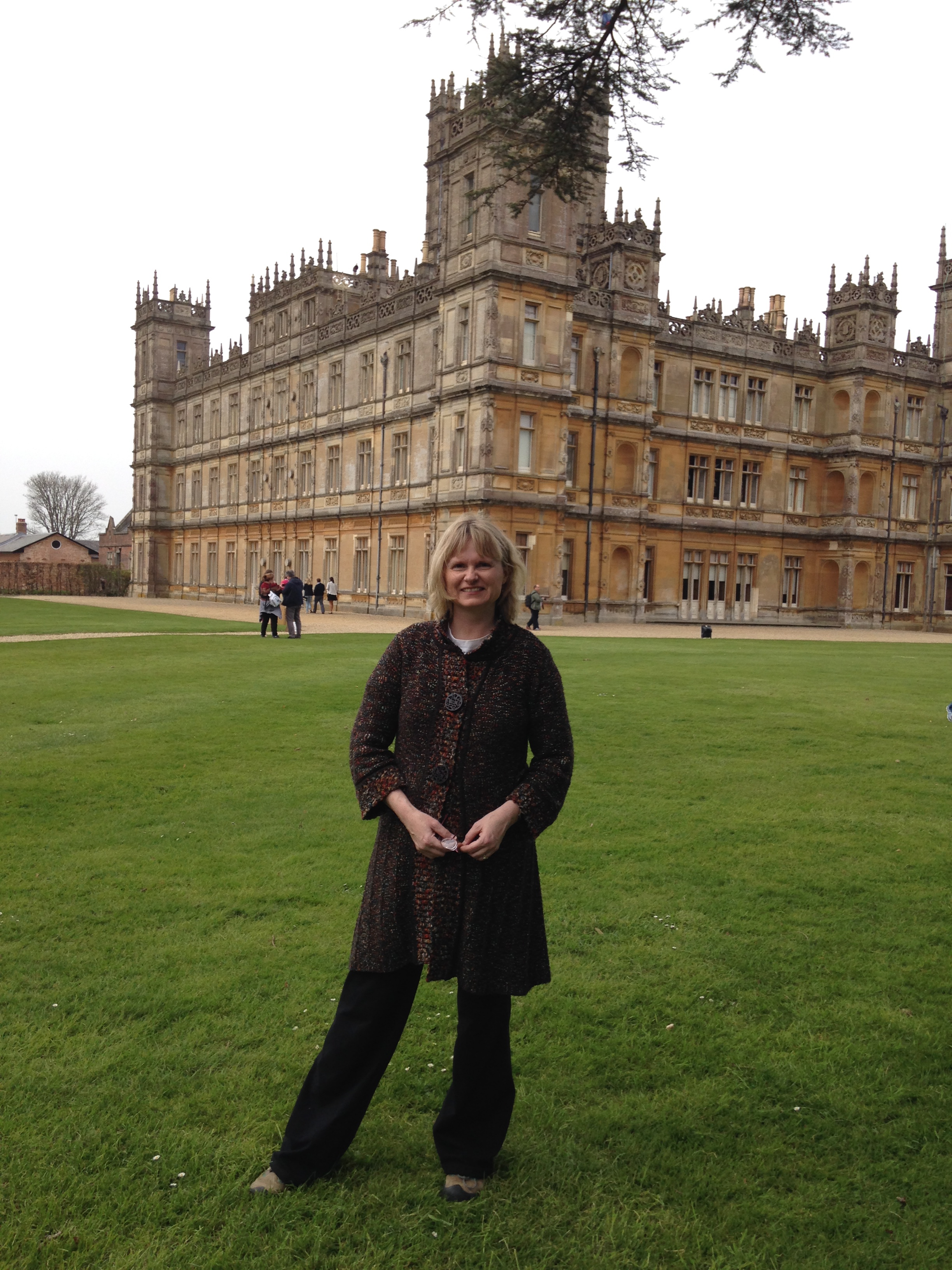
The author at Highclere Castle.

What research did you leave out for this book? 

Eve’s lady’s maid, Marcelle, accompanied her to Egypt on some of her trips. The Egypt scenes were better without her.

What’s hardest for you to write in fiction – real people in history, or fictional characters living in the period? 

Real people.  If you make up too many details, you open yourself up to criticism by readers. At the same time, if you don’t make up details, characterization falls flat. History comes to life through a character’s feelings, thoughts, and opinions.

The colonial aspects of the period might jar some readers. How do you balance the authenticity of the book and its era with modern sensibilities?

The allotment of the treasures is a crucial element of the plot. The discovery of the tomb coincided with the Egyptian nationalist movement toward total independence from Britain. Before the 1920s, foreign excavators claimed a considerable share of the findings. The Egyptian government’s insistence that the Tutankhamun artifacts remain in Egypt became the basis for a new, essential, equitable policy.

Early in the book, Eve, like her father, imagines how nice it would be to see statues from the tomb framing a great fireplace at Highclere Castle. Later in the book, she adopts a more modern point of view that the treasures ought to remain in Egypt. That change of consciousness occurs gradually over many chapters. If the character of Lady Eve had not evolved in that way, she’d come across as highly unsympathetic.

What is your occupational background, and how does that shape your writing?

For a decade after college, I worked in New York City in editorial and rights jobs at E. P. Dutton, Henry Holt, and Macmillan, and as a freelance writer and editor for educational publishers. Though I never rose high in the ranks, I learned a lot about the book business and gained contacts. I sent my first young adult novel to the Delacorte Press, to a former boss of mine; she published it, and numerous other books.

After 2000, on the West Coast, I stayed at home to care for younger and older family members. Frequent trips to libraries gave me a good excuse to see what new titles were being published. Reading lots of books aloud came with many benefits, both for my children and for me. While caretaking, I also learned to manage my time efficiently.
What’s your next project?

I’m returning to some children’s book projects for the first time in a decade.

What’s your best writing advice?                                            

Learn about story structure before you get too deeply into a draft. Scott Driscoll, professor of fiction writing at the University of Washington’s Professional and Continuing Education department, taught me about structure. He uses Story by Robert McKee in his classes. My other advice is to make book trailers to generate excitement for your title. To see photos of the real Lady Eve, visit the “To Chase the Glowing Hours” playlist on my YouTube channel, Katherine Kirkpatrick Sketches_and_Explorations.

What is the last great historical fiction novel you read?

Horse by Geraldine Brooks. May we all aspire to writing such beautiful prose.

Thanks for the interview!
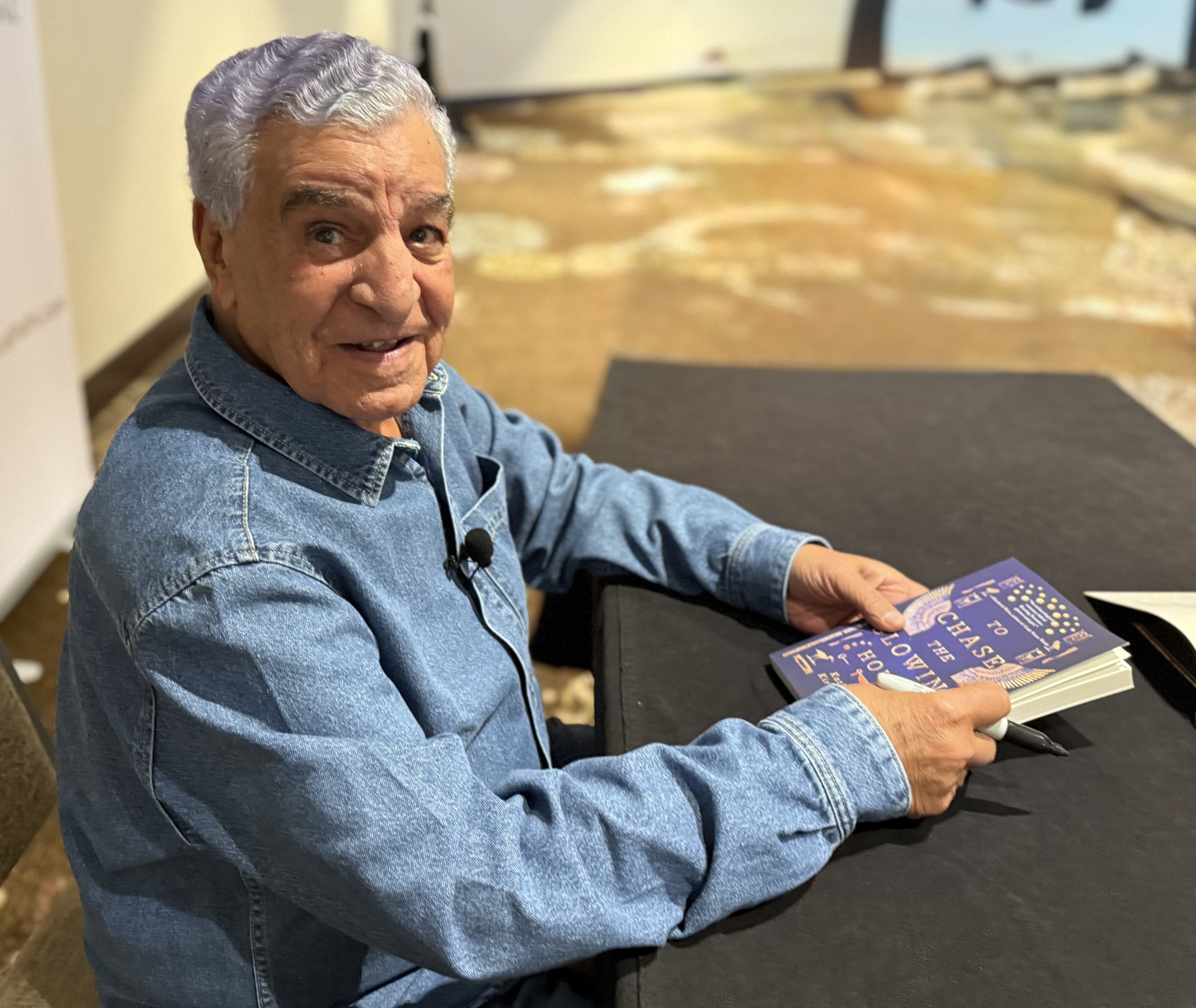
Dr. Zahi Hawass, Egyptian archaeologist.

Katherine Kirkpatrick and Dr. Zahi Hawass

Interview with Katherine Kirkpatrick by Susan Hill Long

Susan: What made you realize you wanted to be a writer? Do you have any advice for aspiring writers?

Katherine: In the sixth grade, I wrote a story about vampire bats attacking a scientist. That year I won my first English prize, the first of many, and writing became “my thing.” I followed a family pattern. My mother did quite a lot of writing, and my brother Sidney (see http://en.wikipedia.org/wiki/Sidney_D._Kirkpatrick), sister, cousin, and grandfather chose careers in writing and/or publishing.

My advice to aspiring writers is to take all assignments, paid and unpaid. Contribute to your school’s alumni magazine and local newspaper. Think about what organizations you belong to. Blog. Write a heartfelt reminiscence when your favorite teacher retires. Volunteer your talents, make people laugh, feel appreciated, hone your skills. I’m so proud of the biography of my father I self-published, The Dale Kirkpatrick Story (http://www.lulu.com/spotlight/allegra1943).

Susan: Why did you choose to write historical fiction for young adults?

Katherine: My mother loved history and partly for that reason my parents chose to settle in a community rich in colonial and maritime lore, the Three Villages (Stony Brook, Setauket, Old Field), Long Island, New York. My family liked to tour historic houses and visit old cemeteries and our local carriage museum http://longislandmuseum.org/, which has a jauntily painted American gypsy wagon, circa 1870, that always captured my imagination. Once I took a children’s writing class held in the museum’s 18th-century one-room schoolhouse.

When I started to write novels, I found myself drawn to the coming-of-age themes of independence, discovery, maturity, and relationships in young adult fiction.

Susan: Where did you get the idea that sparked Between Two Worlds?

Katherine: In the Hall of Meteorites at the American Museum of Natural History in New York, I noticed a photo of four-year-old Marie Peary, the daughter of Arctic explorer Robert E. Peary, onboard a ship with a gigantic meteorite. After researching Marie’s life, I started a novel. I showed it to editor Mary Cash at Holiday House, along with stunning photographs of Marie in Arctic Greenland. With the photos in mind, Mary encouraged me to write a nonfiction book, The Snow Baby, http://www.katherinekirkpatrick.com/book_01.html, published in 2007.

Years later I returned to the novel. It took on new life when I decided to switch perspectives, telling the story from Billy Bah’s, an Inuk girl’s, point of view.

Katherine Kirkpatrick with Jessica Baloun, Third Place Books, Lake Forest Park, WA

Susan: I really enjoyed reading The Snow Baby! Can you tell us a little bit about your work writing both fiction and nonfiction, and how one approach may inform the other?

Katherine: I’d published four novels before I wrote The Snow Baby, so I brought to that photo essay/biography the novelist’s ability to think in terms of drama and scenes. After eight years of publishing nonfiction books, I returned to fiction with Between Two Worlds. Because I’d already researched Arctic Greenland, I focused on plot and character development without thinking so much about getting the history right. It’s been my tendency, like globbing on too much icing on a cake, to pile on historical details. This time around I started with the cake itself and with better results; Between Two Worlds has received excellent reviews.

It’s not a good idea, career-wise, to do the kind of zigzagging between genres that I’ve done. To establish a readership, it’s best to do the same kind of book over and over, preferably with the same publisher. But there’s value, too, in publishing individual titles. A friend of mine puts it this way: “Go to the party where you’re invited.”

Susan: Between Two Worlds is based on a true story. What’s real and what’s made up?

Katherine: About 80 percent of the book is based on historical events. Sixteen-year-old Billy Bah joined the Peary family on his ship Windward, which became locked in ice for eight months in 1900-1901. Just about everything but the triangle love story and conversations with the ancestor-ghosts is historically based.

Susan: Tell us about the real Billy Bah.

Katherine: Billy Bah, also known by her Inuk name, Eqariusaq, was born around 1884 in a remote coastal area of Arctic Greenland. When she was about eleven, she spent a year in Washington, D.C. with Peary’s family. She was both orphaned and married around age fourteen. Peary referred to her as his most expert seamstress. She sewed the fur coat that explorer Matthew Henson wore during the famed Peary expedition of 1909 to the North Pole.

Susan: The setting of 1901 Arctic Greenland plays a distinct and significant role in the novel. Also, you use a lot of Inuktun (Polar Eskimo) words in the book. Were these challenges for you, in terms of making Billy Bah’s story come alive for YA readers?

Katherine: The key to historical fiction is to put the past into the present, to bring out universal themes that a modern-day audience can relate to such as the desire to belong or the need for independence. No matter when, people have always shared many of the same core fears and desires. One common teenage dilemma is that at some point we must act under pressure and make difficult choices. The theme of romantic love is also powerful and universal. Billy Bah’s love affair with the sailor Duncan is the aspect of the book that I feel will most appeal to teen girl readers, fully drawing them into 1901 and the foreign world of Arctic Greenland.

In earlier drafts, I used a lot of Inuktun words. My editor Wendy Lamb cut out most of them, smoothing out the prose, while skillfully leaving in hints of the native sounds. Wendy also had me tone down aspects of traditional Inuit life that modern readers might find off-putting. I deleted the gory chapter in which Billy Bah’s people slaughter walruses and downplayed the cultural norms of uncombed hair, unwashed bodies, head lice, and body lice. Over five rewrites, Billy Bah became more assertive, more mature, and less historically Inuit in terms of personal hygiene.

Susan: What’s the most unusual thing you’ve had to Google for a work in progress?

Katherine: I researched Inuit women washing their hair with urine. It would have put off readers, so I ended up not including that info. Again, sometimes we need to sacrifice a little accuracy for accessibility.

Susan: We all struggle to maintain “balance” in our writing lives. Could you describe your typical writing day?

Katherine: I block out about fifteen hours of morning time, Monday to Friday, for writing, and this time is for writing only. I’ll work in email or phone calls before or after, and in between my family-related commitments, such as taking my 90-year-old father-in-law to his medical appointments and my two middle-school-age children to their music lessons and other activities. I also try to squeeze in exercise time. I like to cook and we make a sit-down dinner a priority. Though I don’t write in the evenings or on weekends, I’ll sometimes do work-related reading or editing. Evenings I like to relax with my cat and play the harp.

Susan: What are you working on now?

Katherine: My novel in progress is set in England and Egypt in 1922-1923, during the opening of King Tut’s tomb. Two years ago, with my sister, brother-in-law, and niece, I visited the book’s Egyptian settings. We toured archaeological sites by small boat on the Nile and flew over the Valley of the Kings in a hot air balloon. This past April, during a family trip to England, I visited my novel’s main British setting, Highclere Castle in Berkshire, outside of London, for the second time. Highclere is now popular as the set for the hit British TV series “Downton Abbey.” I’ve been enjoying myself researching and writing, and I hope that spirit of fun and adventure will go into the book.

Susan: What was it like to have the great Madeleine L’Engle as a writing teacher?

Katherine: Madeleine was the most extraordinary person I’ve ever known. Quite tall, regal, and magnificent in her long purple and blue dresses and exotic jewelry, she projected the same sense of wonder as her classic fantasy novel A Wrinkle in Time. She was more than a little like the three otherworldly presences Mrs. Who, Mrs. Whatsit and Mrs. Which. Her expansive vision included a belief in angels, whom she was sure appeared regularly to all of us. She emanated power, knowing, and love, and had a great talent for bringing out her students’ inherently good qualities.

As a writing teacher she wasn’t what you would expect. Instead of talking about plot, character, or story structure, she preferred more abstract themes about the larger role of writing and art in our lives, such as the concept of story being truth. Invariably she advised, “Write for an hour. Don’t think. Attempts to direct only interfere with creative work.” Her belief about writing was that it’s an entry into the larger Cosmos. Publishing books is a happy by-product, she said. The shared journey is what matters.

In the ten years I knew Madeleine, she taught me about the life of spirit and the value of community. I met most of my closest friends through her. To learn more about Madeleine as a teacher, see the book I edited, A Circle of Friends: Remembering Madeleine L’Engle ( http://www.katherinekirkpatrick.com/book_02.html ).

Thanks for interviewing me, Susan!

 * * * * *

This interview was previously published in abbreviated form on the fabulous historical fiction blog “Corsets, Cutlasses, & Candlesticks” http://corsetsandcutlasses.wordpress.com/ on June 30, 2014.

published by Wendy Lamb Books/ Random House, 2014