ALA Award Envy

Elizabeth Wein and Katherine Kirkpatrick, Setauket, New York, 1999

On Monday, January 27, 2014, I’ll be watching the webcast of the American Library Association’s Youth Media Award announcements, broadcast live from Philadelphia. Everyone in children’s and young adult publishing will be eagerly anticipating the results. In our field, the garnering of a Newbery, Caldecott, or Printz Award is equivalent to an athlete winning a gold medal in the Olympics.

My annual February/March readathon, a time of discovering new books and engaging in stimulating discussion, begins after the announcements. Some years, I’ll read not only every Newbery and Printz winner and honor book, but I’ll also work my way through YALSA’s Best Fiction list. Other years, I’ll stop reading after only a few books; especially if a title of my own has come out. While reading an award-winning book that I don’t feel is worthy, I snap it closed and return all the others to the library unread—shelving the feelings of frustration that their gold and silver seals invoke.

I know better than to view the ALA awards as the be-all and end-all of my writing life. Nevertheless, I get caught up in the annual fervor. The truth is there are thousands of us authors out there, and there are thousands more of our books published every year than there are ALA awards and citations to go around. No matter how good a book may be, chances are excellent that it will go unnoticed among the vast sea of other titles.

In my clearer moments I realize that notions of awards and their perceived value are dark, swirling storm clouds in our minds: If we can guide the plane above such foggy distractions, the view will be beautiful, bright, and expansive. For we can all enjoy a true and lasting sense of abundance on a higher level when we give up our limited definitions of success.

The image of the airplane is an apt one to illustrate the story I’m about to tell.

Last year, on Monday, January 28, 2013, I was in the audience at the ALA Media Awards press conference in Seattle when I heard that my dear friend of 27 years, Elizabeth Wein, won a Printz Honor for her aviation-themed book Code Name Verity.
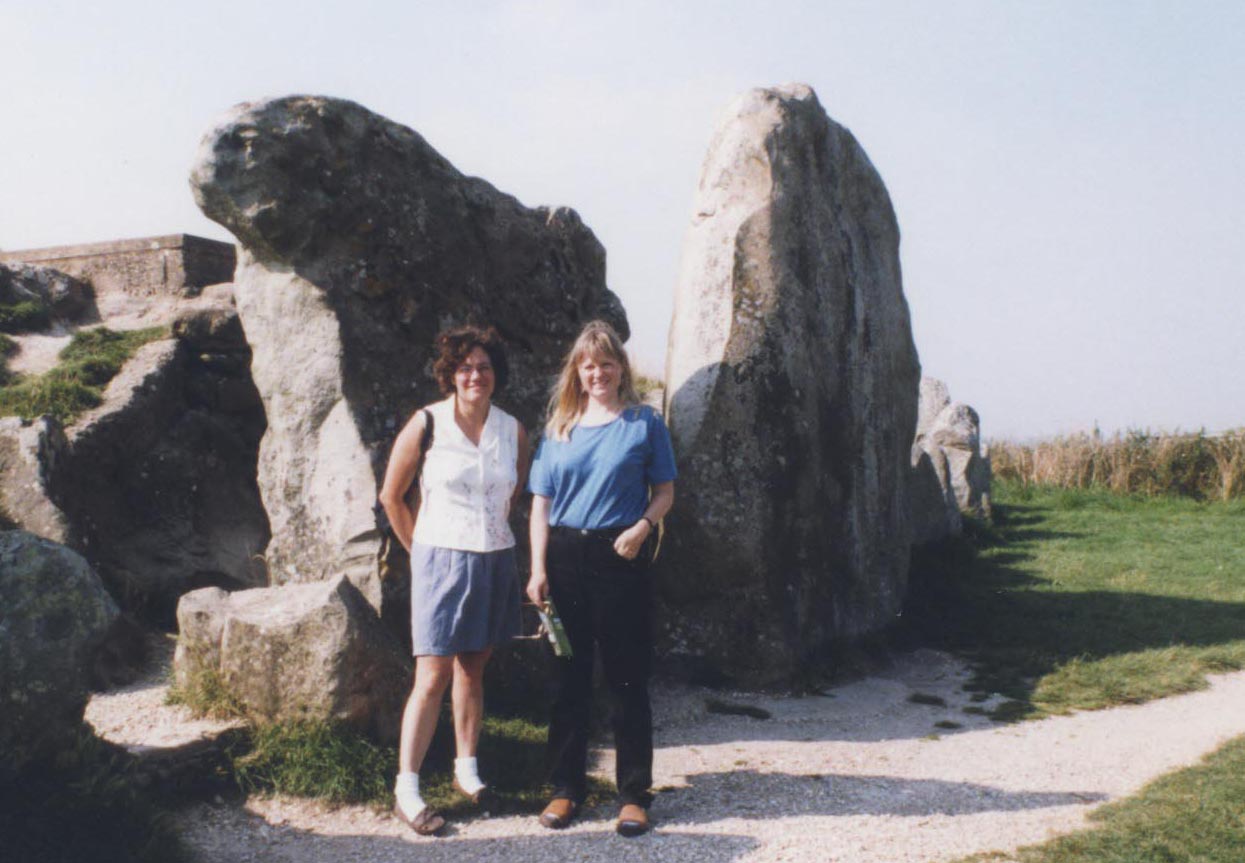
Elizabeth Wein and Katherine Kirkpatrick in Avebury, England, 1999

I’d surmised from the buzz at the ALA Midwinter Meeting that Code Name Verity was a contender for the Printz. My friend, half a world away in Scotland, suspected it, too. Her enormously popular breakout novel had already garnered a ton of starred reviews and media attention. But of course, ALA award announcements often defy expectations, and frequent surprises add to the drama of this high-stakes event.

I wanted Elizabeth to win the Printz, really and truly. But at the same time, as I took my seat that morning in the mobbed auditorium of the Seattle Convention Center, I wasn’t completely sure what my reaction would be if she did. I gave myself a little talk: If Elizabeth wins this award, and if you, Katherine Kirkpatrick, are not one hundred percent happy for her, then you are a miserable, selfish, covetous wretch and you don’t deserve to win any awards in the future.

For those of you who watch the live webcasts of the ALA press conference, let me tell you, there’s nothing like attending the event in person. You notice the MC’s bright red socks. And hear how incredibly loud the audience applauded. And feel the heat of the bright lights and movie cameras. Experience the palpable excitement in the air.

The MC encouraged us to cheer as he read the names of the Printz judges, and I shouted heartily along with everyone else. I had no idea who they were; it didn’t matter. It was fun to get caught up in the energy of the crowd.
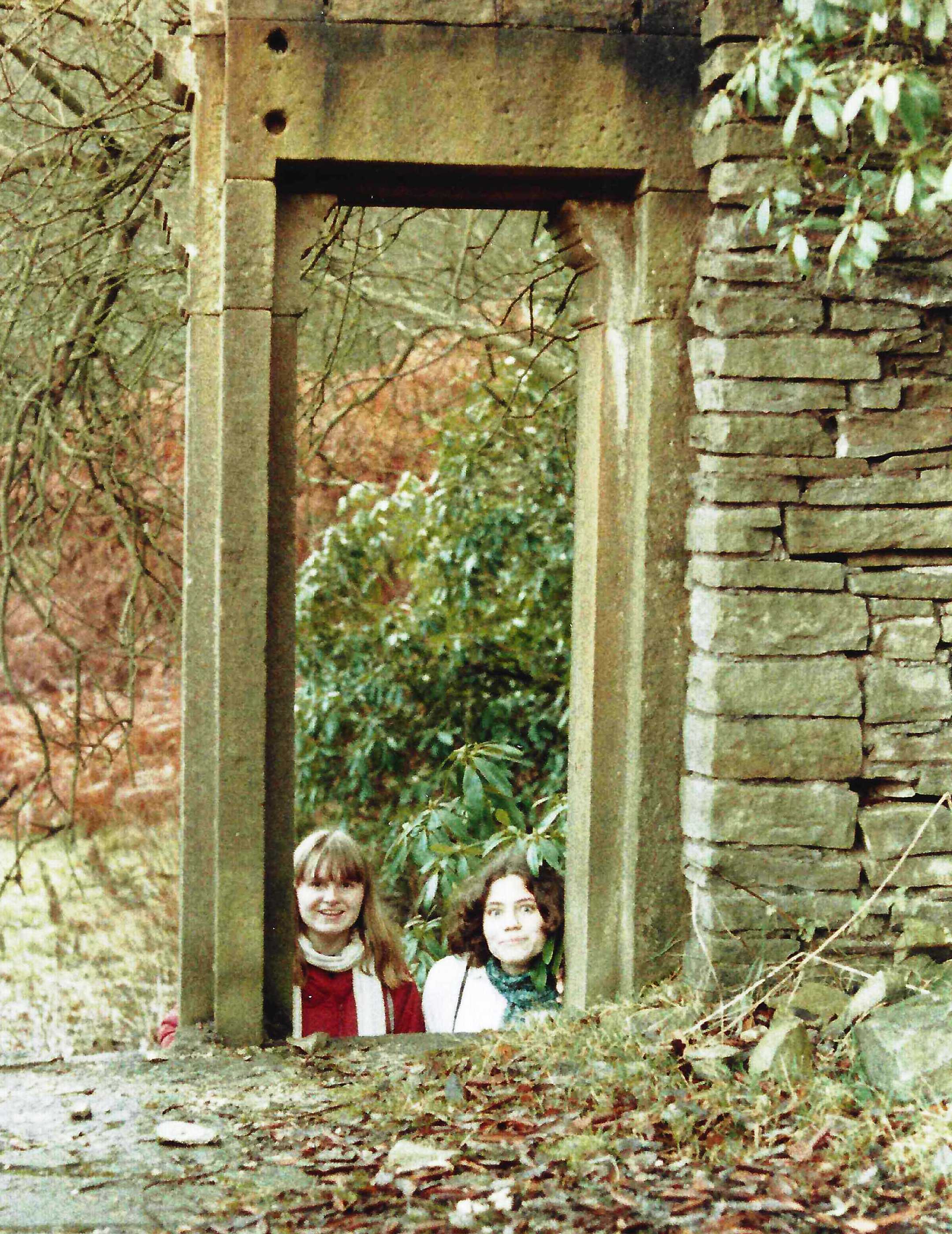
Katherine Kirkpatrick and Elizabeth Wein, Errwood Hall, Goyt Valley, England, 1984

When I heard the words “Code Name Verity” in the honor category, my heart stopped. Honor? Why not winner?! Not that I’d yet read the winning title or any of the other honor books. But at that moment I felt childishly defensive of Code Name Verity, while also knowing that attaining a Printz Honor is almost equally as awesome, weighty, and life-changing as receiving the grand prize.

It wasn’t until about an hour after the press conference that the good news really sank in. I remember standing by myself at the top of the convention center’s escalator under a sky-high ceiling, surrounded by towering walls of glass. A feeling of expansive joy came over me. I was, and am, so proud of Elizabeth and happy for her, for getting her pilot’s license, for writing her fabulous breakout novel, for receiving the fame and recognition she deserves.

I felt happy about myself, too, for being a good friend and for feeling a generosity of spirit. As I was telling a complete stranger at the coat check, your character is tested when someone you’re close to gets something you’ve always wanted.

Friendship, all forms of love and true caring, exist outside of man-made rankings and hierarchies. I feel this truth profoundly when I think about Elizabeth and the good times we’ve had together, before and after college graduation, dreaming of becoming authors, having books published, getting married, having children. We traversed the map of Britain together, and even flew in a private plane to the Isle of Wight.

I wouldn’t trade this friendship for the Printz Award.

Katherine Kirkpatrick, Elizabeth Wein and daughter, with the Piper Warrior, Isle of Wight, England, 1999
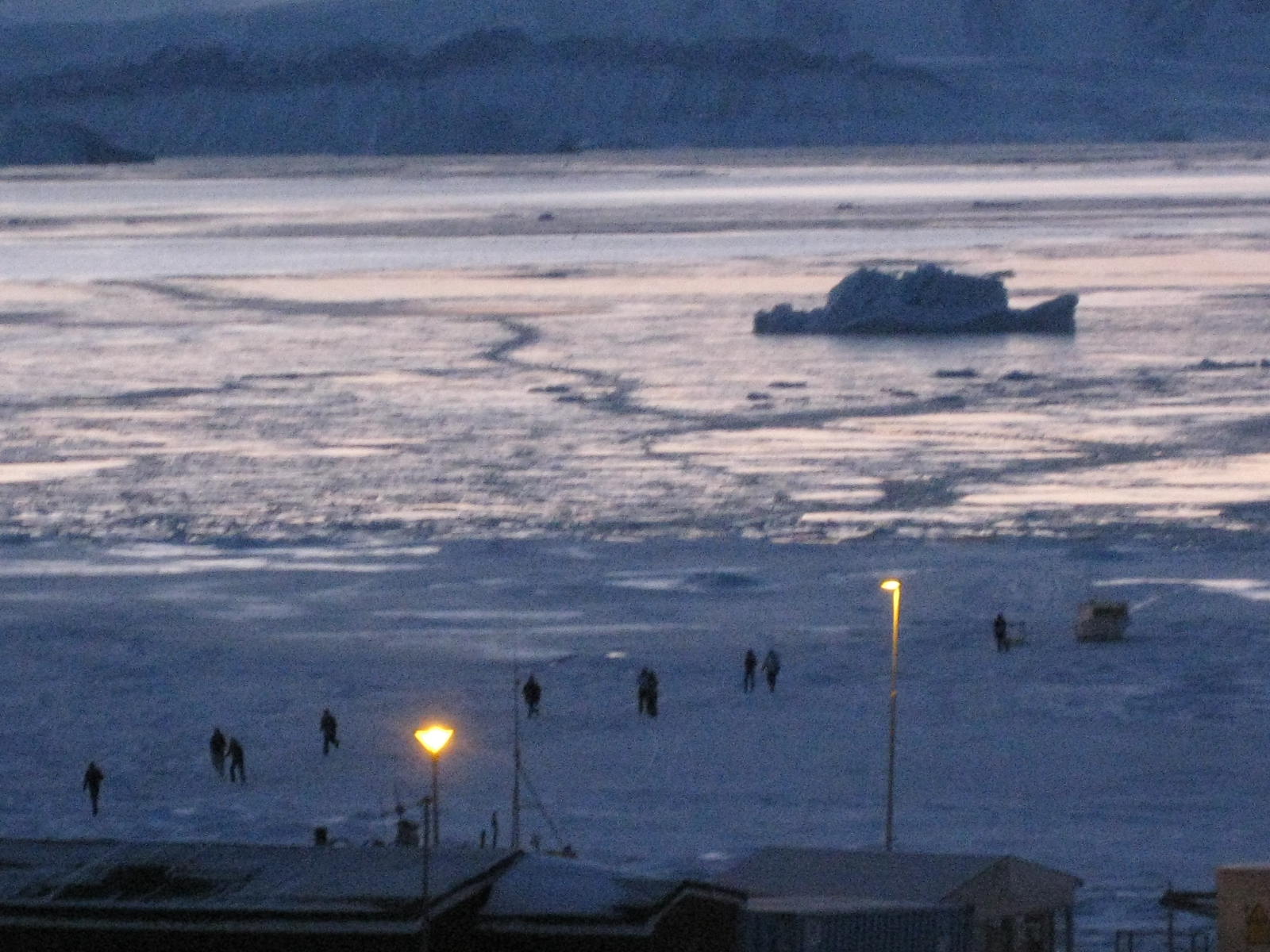
Christmas Card from the North Pole

Floodlights cast yellow circles over the snow, over blocklike buildings, over a dark ocean full of icebergs. Small figures dart from the direction of the ocean toward the buildings. Under this photo, e-mailed to me from Qaanaaq, northwest Greenland, the hunting culture’s most northerly town in the world, the caption reads: “I wish you and your family a Merry Christmas and Happy New Year. Our weather is fine. Right temperature for the area with snow. All my best, Navarana.”

Qaanaaq, Northwest Greenland

Qaanaaq, Northwest Greenland

There may not be a Santa Claus, but there are indeed people living 550 miles (885 km) from that invisible point in the Arctic Ocean known as the North Pole.

Navarana is one of many interesting friends and acquaintances I’ve made over the years through my writing. A native speaker of Inuktun, she helped me with words and phrases for my forthcoming young adult novel, Between Two Worlds (Wendy Lamb Books, Random House, April 2014), a historical fiction adventure story about an Inuk girl on Arctic explorer Robert E. Peary’s ice-locked ship in 1900. Based on a number of true characters and incidents, the book features sixteen-year-old Eqariusaq, also known as Billy Bah, who lived in America with the Peary family for one year, returned to the Arctic, and sewed furs for members of Peary’s expeditions.

Getting to know people like Navarana, whose backgrounds are very different from my own, is my favorite perk of being an author. Here I am in Seattle, the “emerald” city of towering evergreens, and there she is in the treeless polar Arctic, surrounded, at least at this point in the year, by snow and ice.

For the next seven weeks, Navarana will live in total darkness, though the springtime will bring brilliant sunshine and, with the melting snows, patches of green with an abundance of plants and flowers. All summer, beautifully and intricately formed icebergs pass by in the fiord in front of the town. Temperatures in the winter months can drop as low as -30 degrees Celsius (-22 degrees Fahrenheit). The town has cars, pickup trucks, SUVs, a water truck, an oil truck, and an ambulance, though people also travel by foot or dogsled; the only outside road leads to a small airport. At most times of year, residents use motorboats for hunting and other transport.

Navarana has Internet access at home and through her work at the local hospital, where she serves as interpreter and translator. In this community, Danish, Kalaallisut (or West Greenlandic) and the predominant local Thule dialect, Inuktun, mix together with low, wonderful gutteral sounds and long complex words that form whole sentences. Here’s a sample of Inuktun: takuleqangakkit nuannaartunga (“I am happy to see you”). And yes, natives of the hunting culture use cell phones, though, speaking from personal experience, the around-the-world service is a little erratic and very expensive.

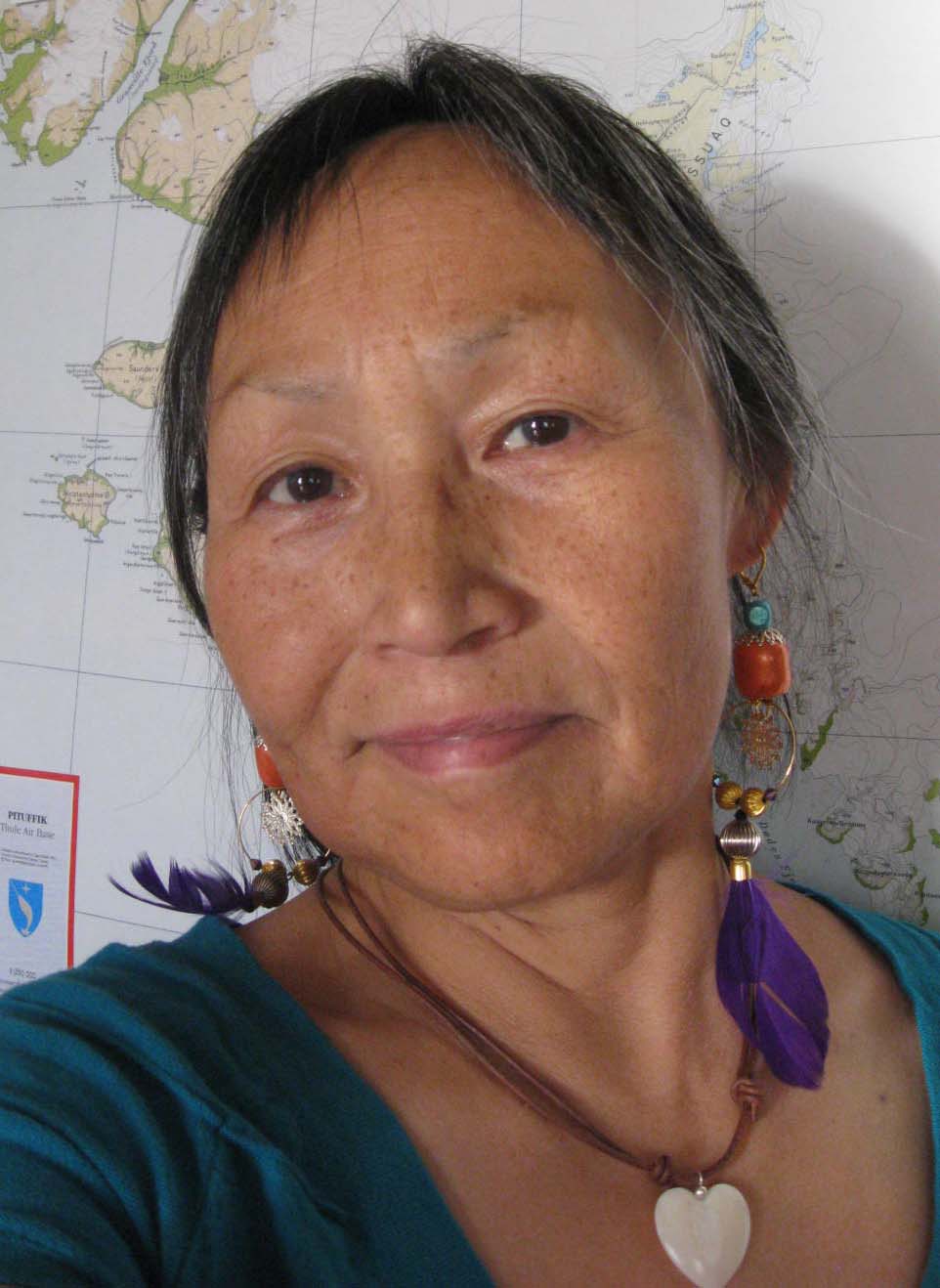
Navarana Sørensen

Navarana Sørensen

Over the past four years or so, while answering questions for my book, Navarana has occasionally offered intriguing glimpses into her life. Once, while explaining a several-month hiatus from her computer, she told me she’d been filming a documentary movie called Vanishing Point (National Film Board of Canada, 2012). During two successive summers, the directors had taken her on narwhal hunts both in her local waters and off Baffin Island. Scenes in the film include Navarana and her group traveling on sea ice by dogsled, hunting, preparing narwhal meat, and feasting. Another scene shows the group capturing little auks and stuffing them in sealskin bags for fermenting into a delicacy to be eaten later. Making the movie was great fun, she said. While in Canada, she’d also enjoyed a visit with her two daughters and grandchild.

During the final editing of my manuscript last winter and spring, I tried reaching Navarana a few times, to no avail. My book had changed titles from Box of Secrets to Between Two Worlds. Because the title represents an important theme in the book, I wanted to include the Inuktun phrase for “between two places” somewhere in the text, but the translation cannot be found online or in any printed dictionary. (It’s pivvit mardhuk akornganni, as I later learned.) What had happened to my living-and-breathing, and occasionally whale-hunting, resource?

Worried when I didn’t hear back from Navarana, I contacted the director of an Arctic museum in Maine who’d first referred me to her; the museum director, too, had unsuccessfully tried to reach Navarana. She confirmed what I’d vaguely suspected: Navarana was ill.

A few more months passed with silence from that wintery top of the world. In early summer, my publisher returned first proofs to me with further language-related questions. By this time, nearly a year had elapsed since my last communication with Navarana. I feared the worst, but I thought I’d try to reach her again anyway.

To my surprise and delight, Navarana, ever her cheerful, friendly self, shot back an immediate reply with many apologies. She’d been in Denmark for medical treatments, she said, but she’d recovered and was overjoyed to be back among her own people again.

What happy news! All that day, I walked about with a light heart. My friend and collaborator whom I’d thought dead was alive. We exchanged a few more e-mails. I sent her my book cover, which shows an Inuk girl running against an icy landscape. She wrote back, “Waow!” which, I think, means she likes it.

Between 2 Worlds cover

It’s happened to me so many times now but it still seems miraculous that I can reach out across continents and oceans to touch another life, and that a faraway person can touch my life in return.

I’ll close with the memory of another holiday card: the now ubiquitous UNICEF image of children of different ethnicities holding hands and encircling the globe. However diluted the message has become through commercial use, it’s still true, powerful and relevant:

The world is one big family.