Katherine Kirkpatrick’s Historical Novel Society Interview

INTERVIEW BY KAREN DRURY for The Historical Novel Society

Katherine Kirkpatrick is the author of ten books, both fiction and nonfiction. When not flying over the Valley of the Kings in a hot air balloon or exploring the secret cabinets of Highclere Castle, she can be found at her computer in Seattle, Washington. Check out Katherine’s YouTube videos on the To Chase the Glowing Hours playlist.

How would you describe this book and its themes in a couple of sentences? 

To Chase the Glowing Hours features the real-life residents of Highclere Castle, the manor made famous in the Downton Abbey television series and films. Lady Eve, the 21-year-old daughter of the Earl of Carnarvon, travels from her opulent home in the English countryside to the Valley of the Kings in Egypt. There, she hopes to realize her father’s dream of finding an intact royal tomb, that of King Tutankhamun. Amidst the excitement of her adventure, Eve finds herself drawn to the brilliant yet temperamental archaeologist Howard Carter. Set against the alluring and glamorous backdrops of Egypt and England in the 1920s, the novel explores themes of love, grief, loss, privilege, and self-discovery.

What inspired you to write this novel?

My fascination with ancient Egypt began as a young child. In 1977, my parents took my family to see the Tutankhamun exhibition at the Metropolitan Museum of Art (MMA) in New York. I stood before Tut’s gold mask, mesmerized. Years later, as I wrote To Chase the Glowing Hours and envisioned Lady Eve entering the tomb, I tried to convey the same sense of wonder I’d felt at the Metropolitan Museum.

My beloved brother, the late author and filmmaker Sidney Kirkpatrick (see SidneyKirkpatrick.com), introduced me to the subject of Lady Eve and suggested I write her story. He learned of Eve when he was interviewing Thomas Hoving, a former director of the Metropolitan Museum of Art. Hoving’s book Tutankhamun: The Untold Story contains an intriguing footnote that became the basis for my novel. Hoving found Lady Eve’s letters to Howard Carter in the Metropolitan’s archives and remarked on their gushing tone.
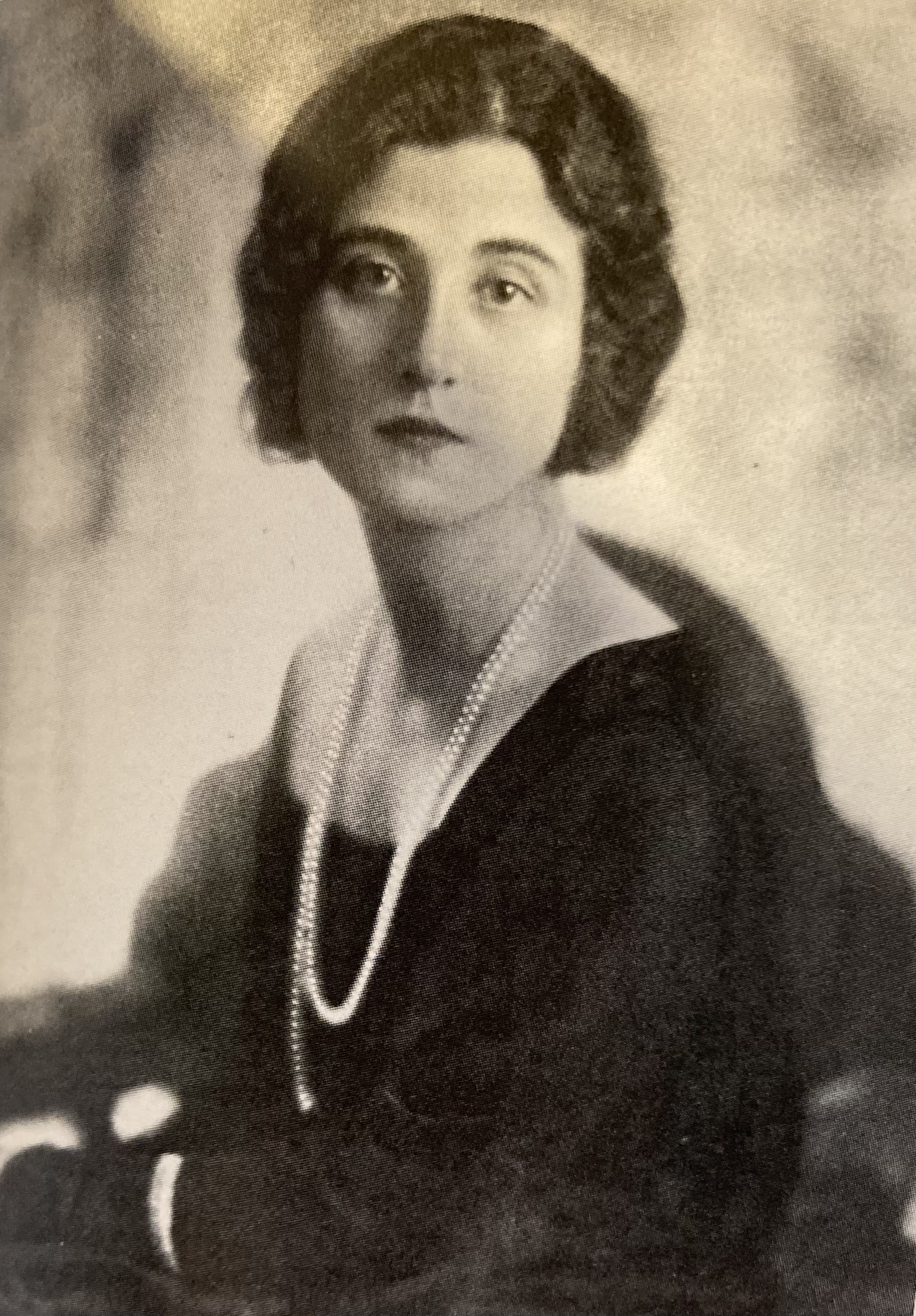
Lady Evelyn Herbert, daughter of the Earl of Carnarvon of Highclere Castle

Would you consider writing the Egyptian side of the story? 

Great idea! Someone Egyptian will have to do it. I hope archaeologist Dr. Zahi Hawass will write a novel about the excavation (he’s writing novels now, you know). Ahmed Gerigar, the chief foreman for the Tutankhamun excavation, would make a good protagonist. Gerigar was an archaeologist in his own right. He didn’t have a university degree or professional affiliation. But neither did Howard Carter (nor Lord Carnarvon, for that matter). But unlike the British men on the dig, Gerigar is never referred to as an archaeologist or Egyptologist or given much credit.

What is your research process? 

I do enough book and archival research to get myself started, then continue to research while drafting. Whenever possible, I visit my book’s settings. For Glowing Hours, I toured Eve’s home, Highclere Castle, twice. That was relatively easy; my late mother-in-law was British, and I was already in a pattern of visiting England every two or three years. Journeying to Egypt was a far bolder adventure to undertake. I left my husband and two young children at home in Seattle, and joined my sister, Jennifer Kirkpatrick, my brother-in-law, Eric Zicht, and my niece, Alice, for an expedition. We stayed in the Luxor Winter Palace Hotel, Lady Eve’s hotel. We visited Howard Carter’s house. We explored Tutankhamun’s tomb, of course. We ferried down the Nile and flew over the Valley of the Kings in a hot air balloon.
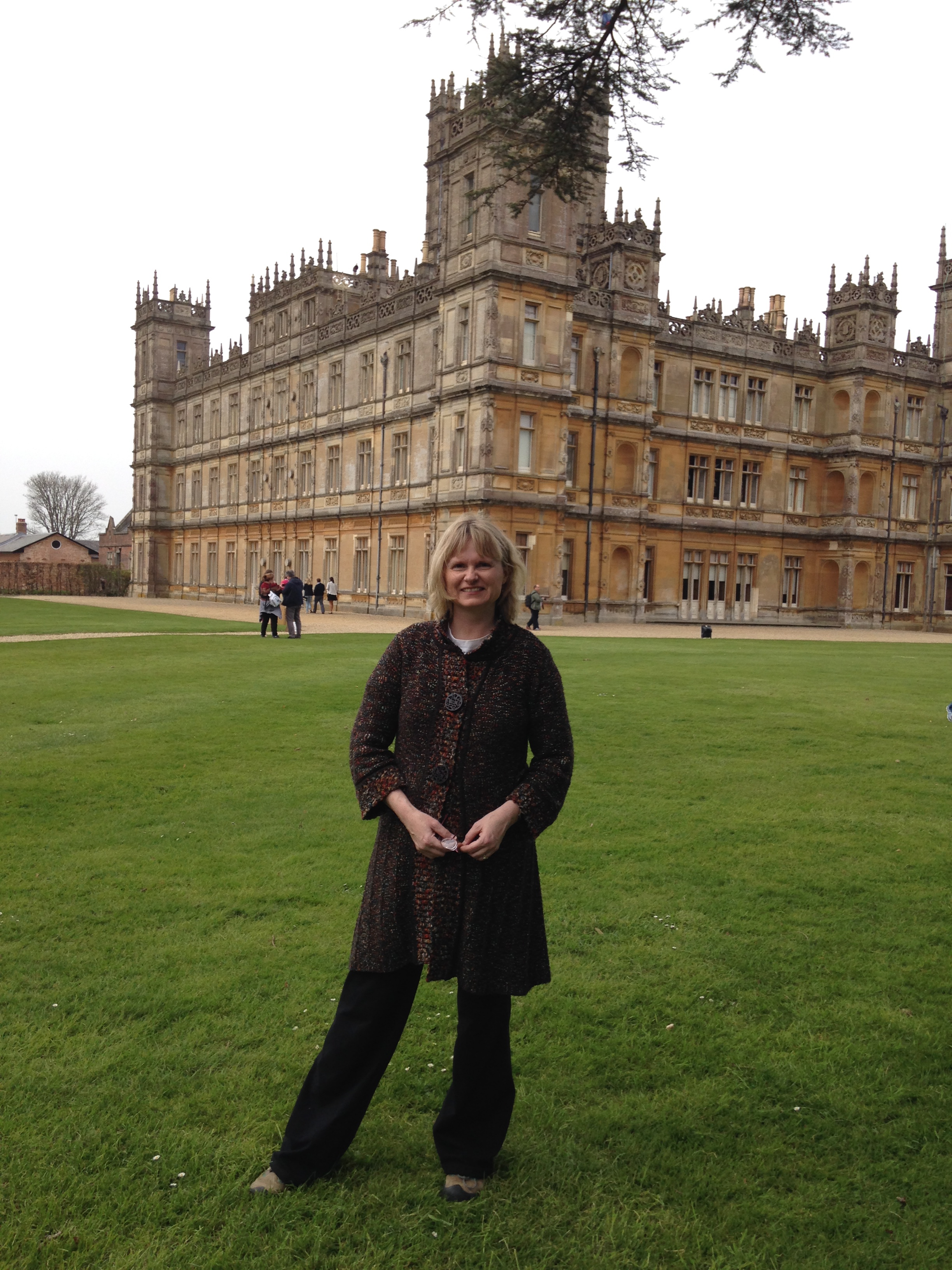
The author at Highclere Castle.

What research did you leave out for this book? 

Eve’s lady’s maid, Marcelle, accompanied her to Egypt on some of her trips. The Egypt scenes were better without her.

What’s hardest for you to write in fiction – real people in history, or fictional characters living in the period? 

Real people.  If you make up too many details, you open yourself up to criticism by readers. At the same time, if you don’t make up details, characterization falls flat. History comes to life through a character’s feelings, thoughts, and opinions.

The colonial aspects of the period might jar some readers. How do you balance the authenticity of the book and its era with modern sensibilities?

The allotment of the treasures is a crucial element of the plot. The discovery of the tomb coincided with the Egyptian nationalist movement toward total independence from Britain. Before the 1920s, foreign excavators claimed a considerable share of the findings. The Egyptian government’s insistence that the Tutankhamun artifacts remain in Egypt became the basis for a new, essential, equitable policy.

Early in the book, Eve, like her father, imagines how nice it would be to see statues from the tomb framing a great fireplace at Highclere Castle. Later in the book, she adopts a more modern point of view that the treasures ought to remain in Egypt. That change of consciousness occurs gradually over many chapters. If the character of Lady Eve had not evolved in that way, she’d come across as highly unsympathetic.

What is your occupational background, and how does that shape your writing?

For a decade after college, I worked in New York City in editorial and rights jobs at E. P. Dutton, Henry Holt, and Macmillan, and as a freelance writer and editor for educational publishers. Though I never rose high in the ranks, I learned a lot about the book business and gained contacts. I sent my first young adult novel to the Delacorte Press, to a former boss of mine; she published it, and numerous other books.

After 2000, on the West Coast, I stayed at home to care for younger and older family members. Frequent trips to libraries gave me a good excuse to see what new titles were being published. Reading lots of books aloud came with many benefits, both for my children and for me. While caretaking, I also learned to manage my time efficiently.
What’s your next project?

I’m returning to some children’s book projects for the first time in a decade.

What’s your best writing advice?                                            

Learn about story structure before you get too deeply into a draft. Scott Driscoll, professor of fiction writing at the University of Washington’s Professional and Continuing Education department, taught me about structure. He uses Story by Robert McKee in his classes. My other advice is to make book trailers to generate excitement for your title. To see photos of the real Lady Eve, visit the “To Chase the Glowing Hours” playlist on my YouTube channel, Katherine Kirkpatrick Sketches_and_Explorations.

What is the last great historical fiction novel you read?

Horse by Geraldine Brooks. May we all aspire to writing such beautiful prose.

Thanks for the interview!
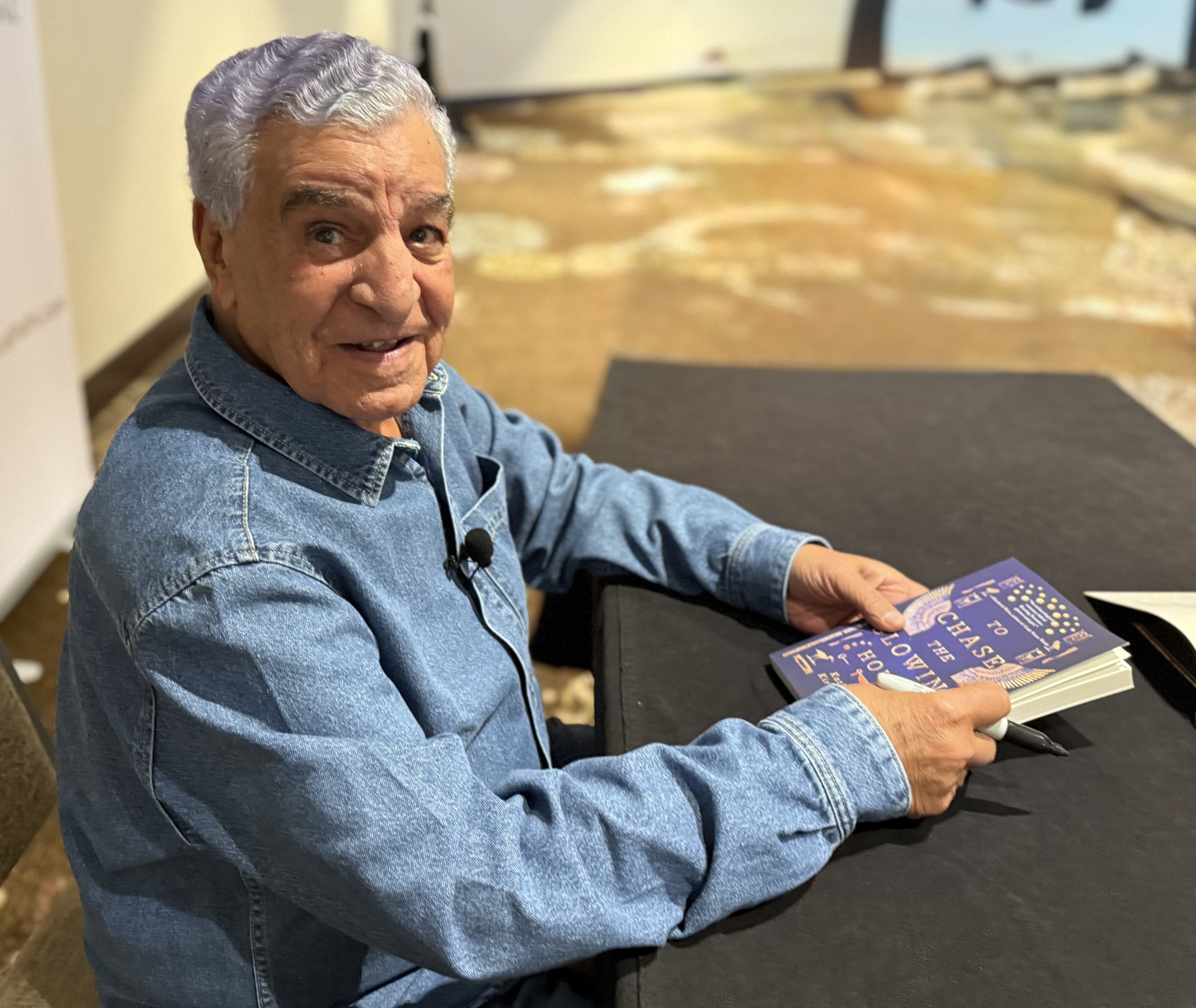
Dr. Zahi Hawass, Egyptian archaeologist.

Katherine Kirkpatrick and Dr. Zahi Hawass

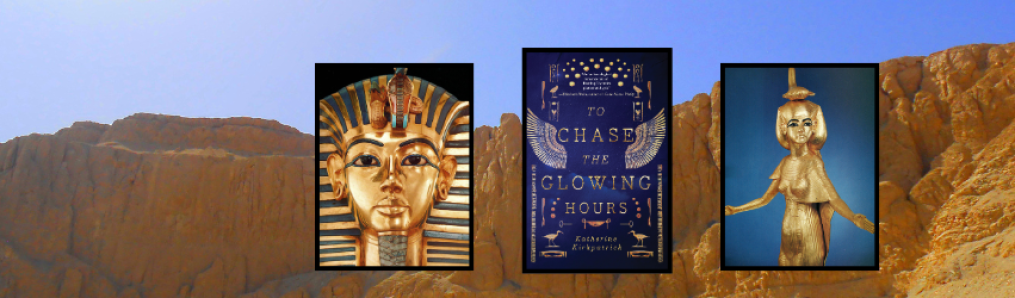
The Cover of My New Book

Dark blue was a favorite color in ancient Egypt. It is the color of the sky, home to the gods. Blue represents the cosmos and spirituality. It’s precious like lapis lazuli. I particularly like this color, so I am glad to see it featured on my new book cover.

Based on true-life characters and incidents, To Chase the Glowing Hours is a coming-of-age story about 21-year-old Lady Eve, who traveled in 1922 with her father, Lord Carnarvon, from her opulent home of Highclere Castle in the English countryside to the Valley of the Kings in Egypt. Her father’s hired archaeologist, Howard Carter, believed he’d found a royal tomb. A sealed doorway at the base of an underground stairway indicated that possibility. But of course, the phenomenal riches that Carter, Eve, and Carnarvon eventually uncovered would far surpass their expectations.

Gold was the color the ancients associated with royalty, divinity and immortality. King Tutankhamun’s tomb was filled with dazzling, golden objects, not least of them his solid gold sarcophagus. And since my novel To Chase the Glowing Hours (Regal House Publishing, September 2025) is about the Tutankhamun excavation, gold figures prominently on the cover. Gold also relates to the word “glowing” in the title.

The goddess Serket from Tutankhamun’s magnificent, gilded canopic shrine. Freepik.com

I wonder what Howard Carter would have thought of my book cover. As an exacting man who prided himself on his scholarship, he would have faulted its lack of accuracy. As attractive as the hieroglyphs are, they do not spell out an actual message. They are purely decorative.

Eve, however, would have enjoyed the cover. Her emotions and her senses guided her. Beholding Tutankhamun’s treasures as they emerged from the darkness was the greatest moment of Eve’s life. It wouldn’t have taken much to remind her of that experience—the warmth of a sunny day or the scent of perfume. The Egyptian theme of my book cover would have evoked a beautiful memory. 

For most people, enjoying ancient Egyptian culture is deeply connected to our senses. This is also true for me; however, reading books about Egyptian art has deepened my appreciation and understanding of it. Images that once puzzled me now resonate with clarity. Many Egyptian symbols relate to higher consciousness, immortality, eternity, and Oneness. These concepts are universal across various religions and hold personal significance for me.

Scarab design based on jewelry found in Tutankhamun’s tomb. Freepik.com

The pair of bird wings on the book cover resembles wings on scarabs. The scarab symbolizes rebirth. Wings lift the soul out of a discarnate body. The newly deceased pharaoh is often portrayed as a bird with a human head, as his soul is about to take flight. Deities are also depicted with wings; like birds, the gods and goddesses travel effortlessly throughout the cosmos. According to ancient Egyptian belief, we are soul travelers as well. There is a divine part in each of us that will ultimately express itself as starlight.

I hope you enjoy the deep blue and the elegant gold designs of the book cover. I especially hope you will enjoy reading To Chase the Glowing Hours. May the novel sweep you into the sensual world of King Tutankhamun’s treasures, ancient Egypt, and the worlds beyond.

A Charmed Week

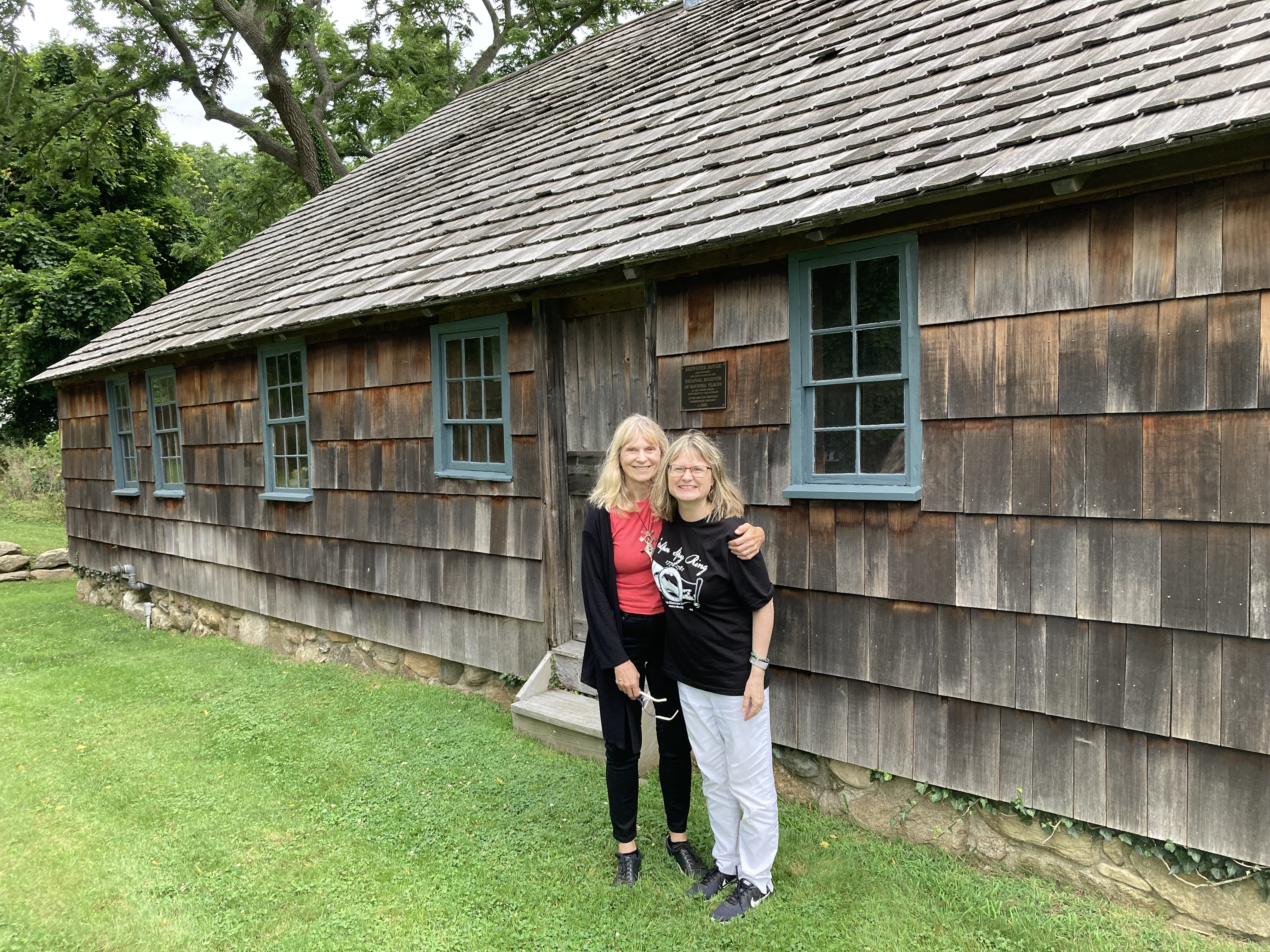
            For about a year and a half, but mostly within a week in July 2021, I experienced a series of fortuitous incidents when I was researching and writing my book The Art of William Sidney Mount: Long Island People of Color on Canvas (coauthored with Vivian Nicholson-Mueller, publication date September 5, 2022, The History Press). The book involves the Black and biracial people who modeled for William Sidney Mount, a famous 19th century artist. Mount lived and worked in the Three Village (Stony Brook, Setauket, and Old Field) area in Long Island, New York, where I grew up. My wonderful sister, Jennifer, and I rented an Air B & B together in Stony Brook so she could take photos of old houses for the book, gather materials for the map she would draw, and most of all, for the two of us to have fun together in the setting that is very dear to both of us. I live in Seattle and Jen lives in Virginia, and it was the first one-on-one vacation we’d had in many years apart from our husbands and families.

Jen and I pose in front of the Brewster House in Setauket.

            Here are some examples of synchronicity:

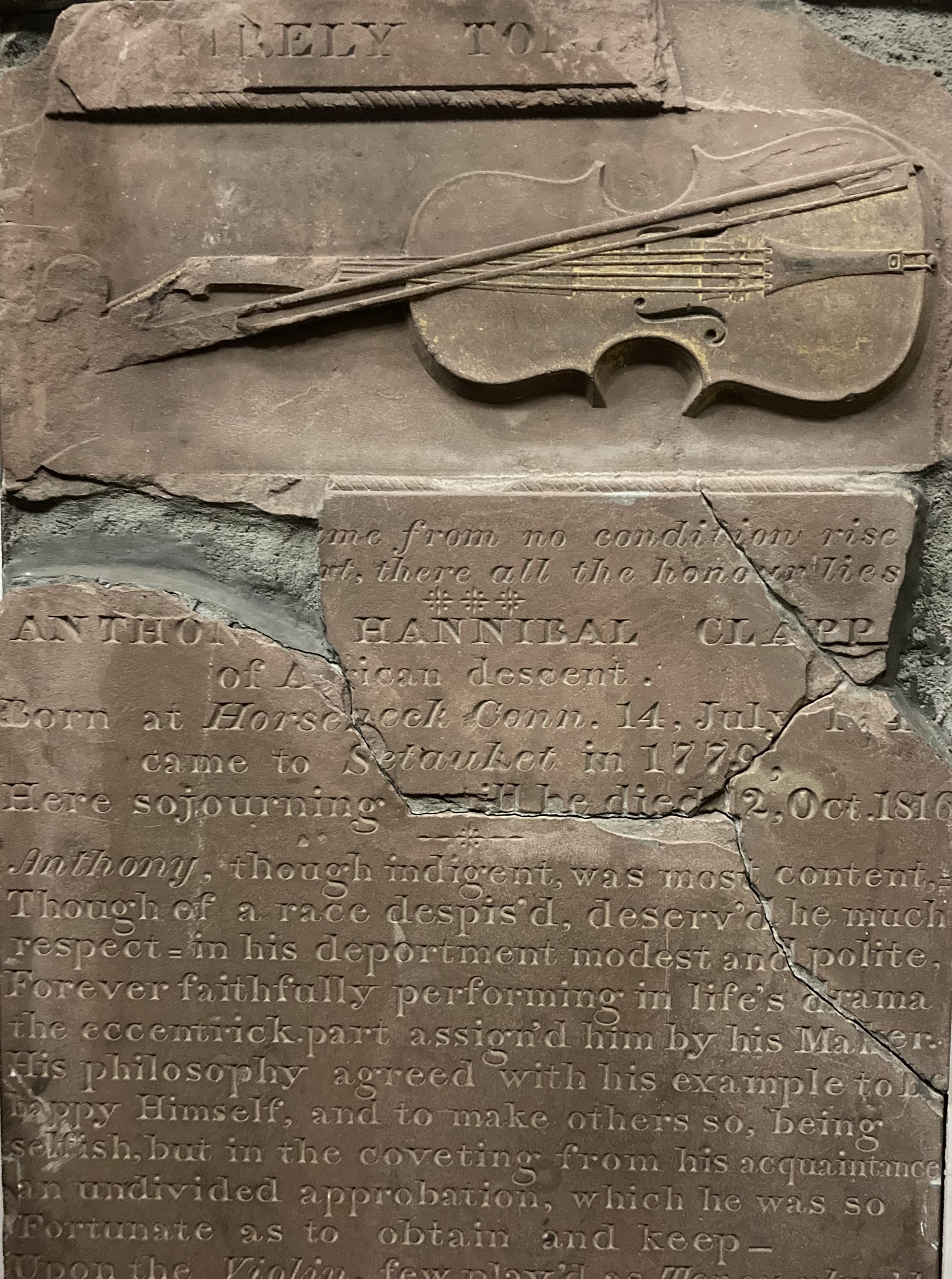
            Mount recalled childhood experiences of knowing a Black fiddler, Anthony (Tony) Hannibal Clapp (1749-1816), and sitting at Clapp’s knee while he played folk tunes. Clapp was buried in a cemetery for people of color on land that used to belong to Mount’s grandfather. I’d read an article about an unnamed Stony Brook resident finding that overgrown cemetery in land behind his back yard. One day, about a year and a half ago, while texting my coauthor, Vivian, about Anthony Clapp, a Facebook Messenger text came in for me at the very same time from a school friend, Bob, who wanted to tell me about a webinar he thought I’d enjoy. For the first time in decades, I talked to Bob on the phone. I told him about the Mount book I was writing. He told me about the cemetery he’d discovered in back of his house. You guessed it—Anthony Clapp’s grave site! 

Anthony Hannibal Clapp’s gravestone, carved by Phineas Hill, circa 1816, the Long Island Museum of American Art, History and Carriages Collection, 0007.015.2140. Photo by Katherine Kirkpatrick.

           Jen and visited Bob and his wife, Anna, and they showed us the cemetery. While there, I told Bob I was hoping to see a house in Stony Brook where William Sidney Mount’s sister (and people who are likely portrayed in Mount’s Dance of the Haymakers) lived. I had an address from the 1970s; for all I knew, the house could have been torn down. Bob knew the house and its owner, and drove my sister and I over to it. The owner, named Rich, said to my surprise, “I know you! I was your father’s chauffeur.”

            What chauffeur? My sister, Jen, and Rich filled in the story. My dad, Dale Kirkpatrick, broke his neck two years before I was born while teaching my brother to dive off a diving board at our beach club. Rich was the teenage son of my dad’s chiropractor. While Dad’s neck was in traction and he couldn’t drive, he employed Rich to take him places. Rich turned out to know a lot about William Sidney Mount and gladly showed Jen and Bob and me around the house. 

            Within a day of that visit, I had another serendipitous meeting, this time in Stony Brook’s Crazy Beans restaurant. Months earlier, I’d written to the head of a local preservation organization through a general website contact, but did not get a response. Attempts at obtaining the director’s email address had failed. I wanted to meet her because she was in charge of an old house, now a museum, where several of Mount’s models had lived. While Jen and I were having brunch with one of my longtime school friends, Paul, we were suddenly surprised when Leighton, another longtime school friend, strolls in—accompanied by the organization’s director. 

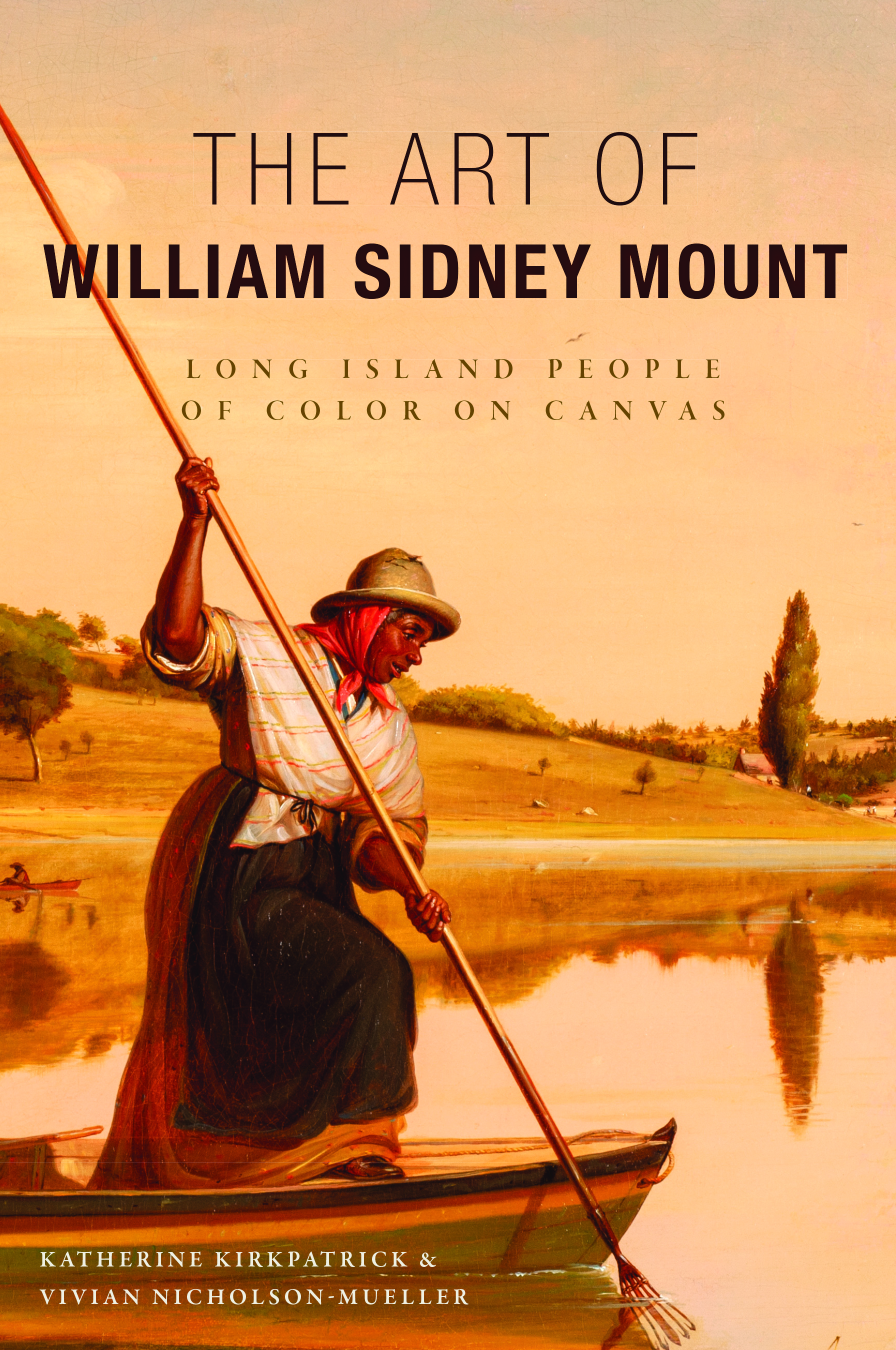
            Another day that week, Jen and I hiked along the narrow strip of Setauket’s Shore Road in a quest to find out where William Sidney Mount had been situated when painting Eel Spearing in Setauket in 1845. Looking across Setauket Harbor at Strong’s Neck, we searched in vain for St. George’s Manor, the house depicted in the artwork. A lot of trees had grown up and houses built since Mount’s time. Barbara, Brookhaven Town’s Historian, happened to be driving by in her convertible on the way to playing golf. “I recognize you two!” she said, pulling the car aside. We’d visited her the day before at her office in Farmingville. As it turned out, Barbara had grown up on Shore Road. She took us to a place where we could see the manor; as it was barely visible in the summer’s foliage, we wouldn’t have spotted it on our own.

Jen taking photographs on Shore Road, Setauket.

            There are numerous other examples of synchronicity related to this project; I’ll tell you just one more. Jen and I ran into a family friend, Megan, while visiting the Long Island Museum. We were surprised to hear that Megan was employed by the museum. Last we’d heard Megan was living and working in Manhattan. She’s now in charge of reopening the museum’s gift shop, and is involved with a book event for me that will take place on October 2, 2022. 

            Out of my nine published books, The Art of William Sidney Mount: Long Island People of Color on Canvas is the only title to go into print within a year of contract. In most cases I experienced a lag of at least three years. I ask myself how I could be so lucky in regard to this book, while I’ve encountered many obstacles for other projects. Arguably, there’s a certain ease that comes about when choosing a subject related to one’s hometown. My late parents, Audrey and Dale Kirkpatrick, were very active in the Three Village community. Still, does my family’s wide network of acquaintances and friends explain the nature and timing of my experiences?

            My friend author Andrea Simon uses the Yiddish word bashert (orchestrated by God) to describe a certain kind of synchronicity, in which things easily fall into place in uncanny ways. Was I experiencing bashert? I’ll leave it at this. I believe there are periods in our lives when we are particularly in the flow, and when we are particularly receptive to being in the flow. I believe that when we are relaxed and happy, as I was when I was enjoying time with my sister, that fortuitous occurrences are most likely to take place. 

            May the synchronicity related to my project continue. I’m hoping that the stories in the book connect descendants to their ancestors and descendants to each other. And I’m hoping for further opportunities to reconnect with those from my Three Village past.  

Cover for The Art of William Sidney Mount: Long Island People of Color on Canvas by Katherine Kirkpatrick and Vivian Nicholson-Mueller (The History Press, publication date September 5, 2022). Detail from Eel Spearing at Setauket (Recollections of Early Days–“Fishing Along Shore”), 1845, by William Sidney Mount (1807-1868). Collection of the Fenimore Art Museum, Cooperstown, New York. Gift of Stephen C. Clark. Photograph by Richard Walker. N0395.1955.