by Katherine Kirkpatrick and Vivian Nicholson-Mueller (The History Press)
From farmers cutting hay with scythes to dancers jigging to fiddle music on barn floors, artist William Sidney Mount’s paintings reveal a seldom recognized world on the North Shore of Long Island. At a time when racist caricatures were the norm, Mount portrayed people of color in his mid-nineteenth-century works with great humanity. The subjects who posed for Mount include Rachel the eel spearer, Henry Brazier the left-handed fiddler, George Freeman the jaunty banjo player and other agricultural laborers, domestic workers and musicians. Authors Katherine Kirkpatrick and Vivian Nicholson-Mueller honor by name the once anonymous Black and mixed-race models depicted in Long Island artist William Sidney Mount’s internationally renowned paintings.
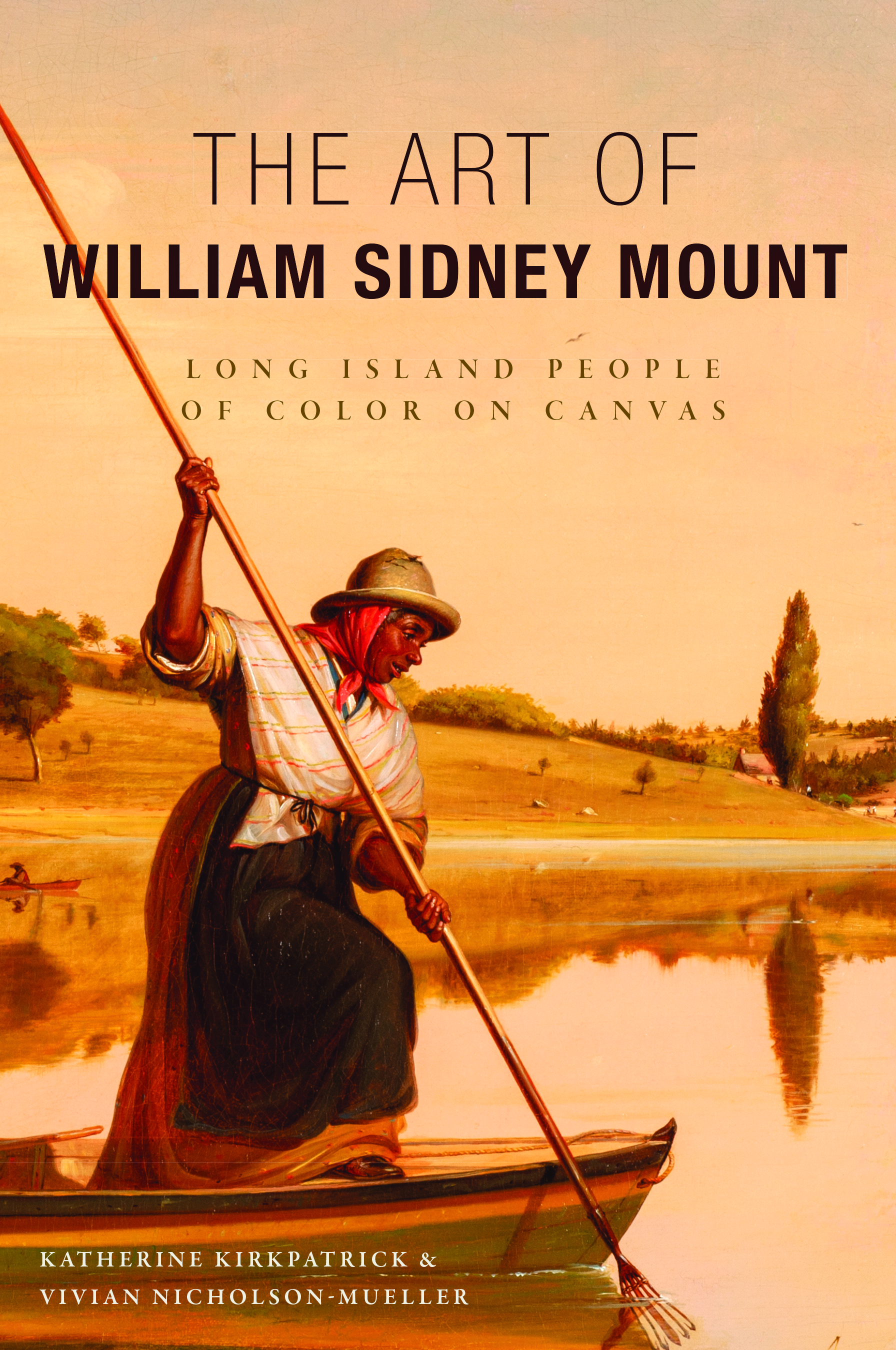
Cover art: Detail from Eel Spearing at Setauket (Recollections of Early Days–“Fishing Along Shore”) by William Sidney Mount, 1845, Collection of the Fenimore Art Museum, Cooperstown. Gift of Stephen C. Clark. Photograph by Richard Walker. N0395.1955.
Featured in:
*American History Magazine and History.net
*Newsday’s Long Island Life Magazine (cover story)
*Long Island History Project (Podcast)
*Long Island History Journal
“With this book and lectures the authors have given recently, we come to know all the people and places beautifully painted by William Sidney Mount.”–Suzanne Johnson, Long Island History Journal
The Power of Music (The Force of Music) by William Sidney Mount, 1847, The Cleveland Museum of Art. Leonard C. Hanna Jr. Fund. 1991.110.
 Katherine Kirkpatrick